Route: Addis Ababa (ADD) → Paris Charles de Gaulle (CDG) | Cabin: Business Class (Cloud Nine) | Aircraft: Airbus A350-1000, seat 3J | Flown: May 4, 2026
I flew Ethiopian on a staff rate, trading the polish of a Gulf carrier for a fare well below Qatar, Etihad, or Emirates. The question was whether a layflat seat and a screen would be enough. This Ethiopian Airlines Business Class review covers that question on the Addis Ababa to Paris route, flown on one of the airline’s newest aircraft, the Airbus A350-1000.
Route and Aircraft
Ethiopian Airlines was founded in 1945 and has flown internationally since 1951. It joined Star Alliance in 2011, the third African carrier to do so. By fleet size, destination count, and passenger numbers, it’s now easily Africa’s largest airline. The fleet spans roughly 150 aircraft across the 737, 767, 777, 787, and A350 families, run out of its Addis Ababa hub at the center of the airline’s Africa–Middle East–Asia–Europe network.
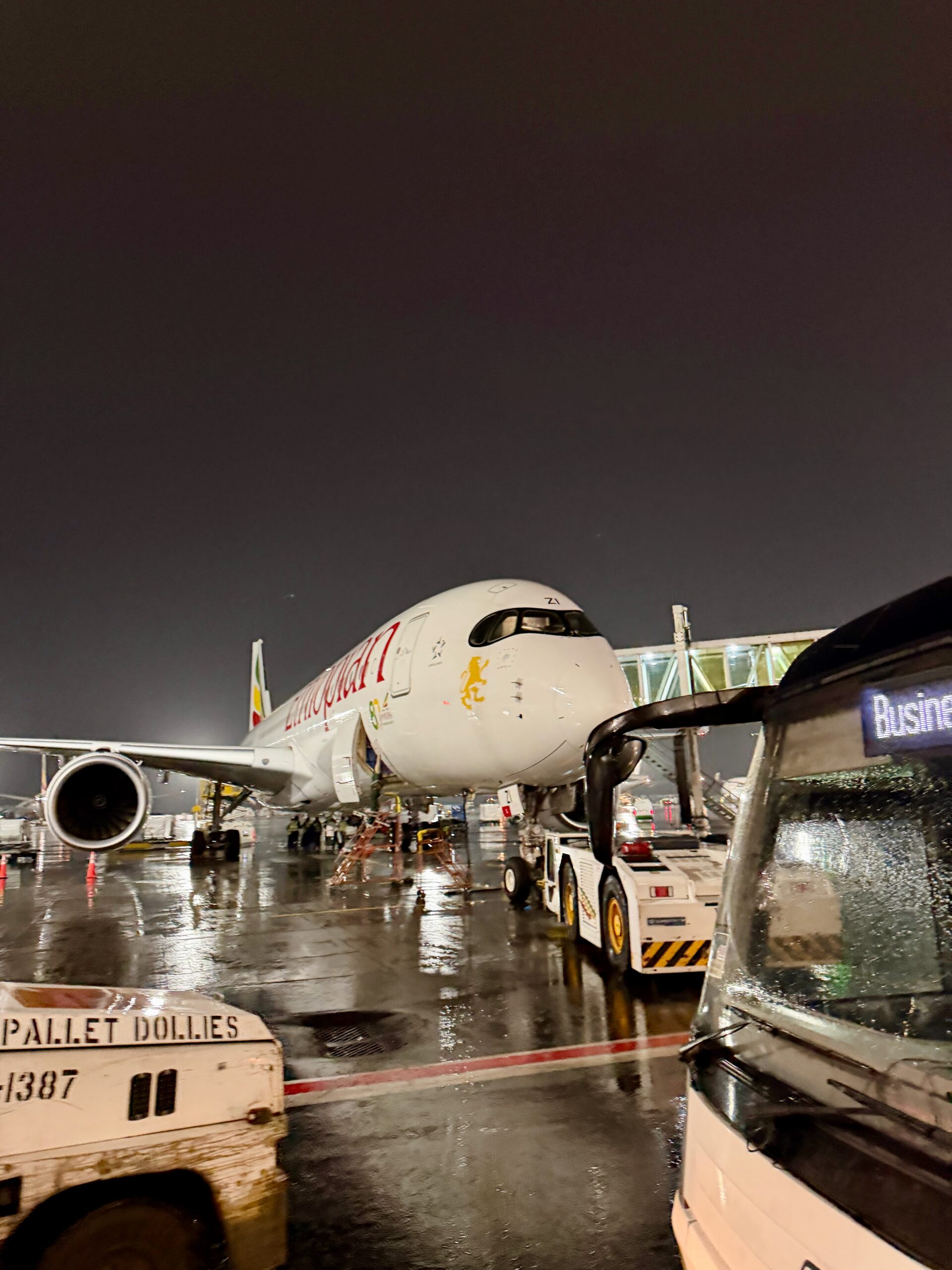
The A350-1000 is the newest addition to that fleet. Ethiopian is the only African carrier flying it, and it operates just four of them. Ethiopian took delivery of the first from Toulouse in November 2024. This aircraft felt new, under a year in service by my estimate, and it carries Ethiopian’s current-generation Cloud Nine Business Class product, a step up in seat hardware from what’s fitted on the airline’s 787s.
Ground Experience and the Cloud Nine Lounge
Ethiopian runs several business class lounges at Bole International Airport, but the Cloud Nine Lounge is the main one, centrally located and close to the airline’s dedicated business class gate. The food on offer was standard lounge fare, with one nice touch: a traditional Ethiopian coffee corner.
The business class gate itself is a bus gate. Passengers are bussed out to the aircraft rather than walking down a jet bridge, and honestly, if you don’t mind a short walk, boarding directly at the gate would have been the easier option. Ethiopian is currently building a new airport for Addis Ababa, Bishoftu International Airport, roughly 40 kilometers outside the city. Zaha Hadid Architects designed it, with an eventual capacity of 110 million passengers and a $12.5 billion price tag. Construction broke ground in January 2026, with the first phase due to open in 2030. Given the scale of that project, I doubt bus-gate boarding survives the move.
Cabin, Seat, and Sleep
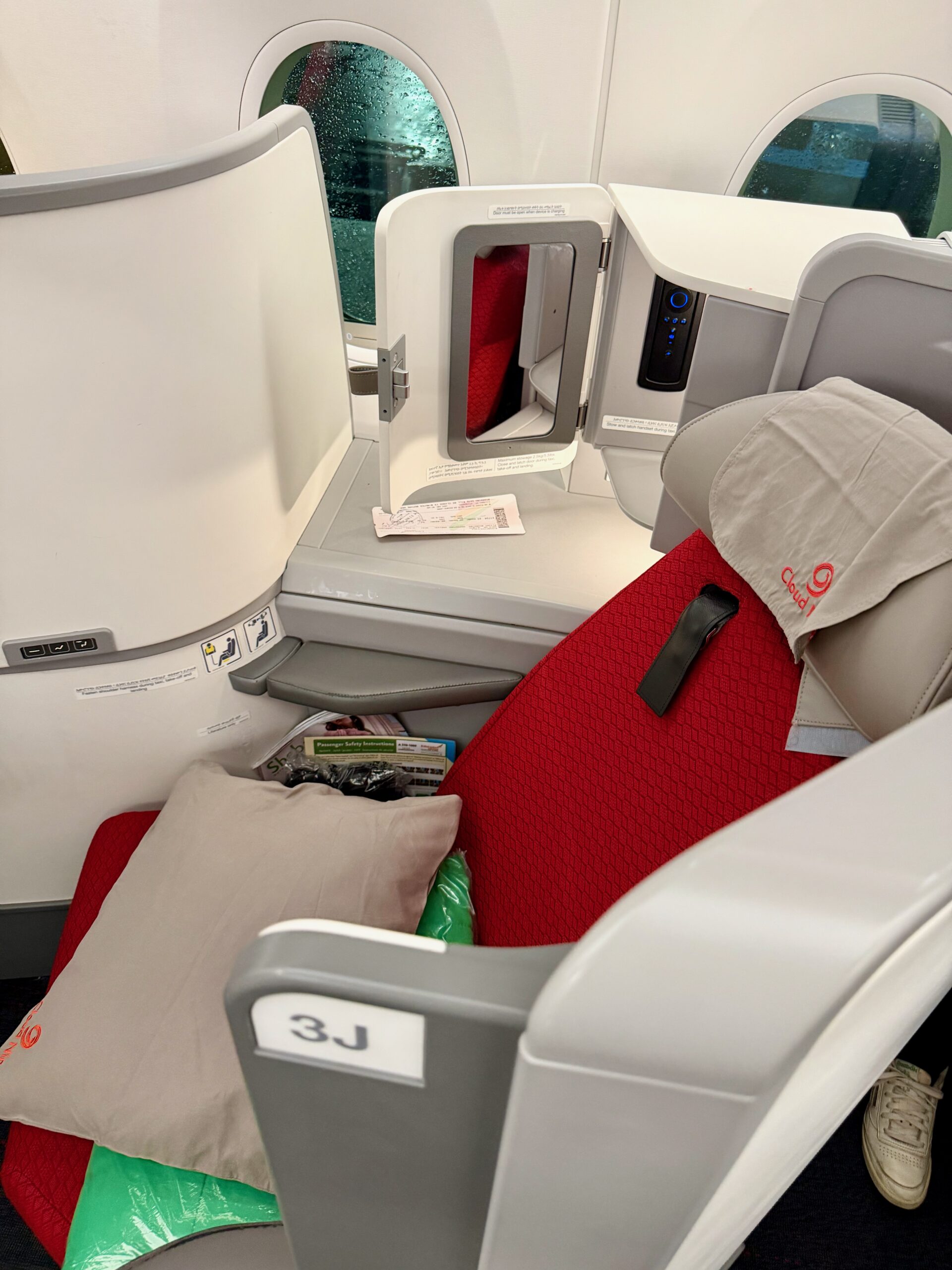
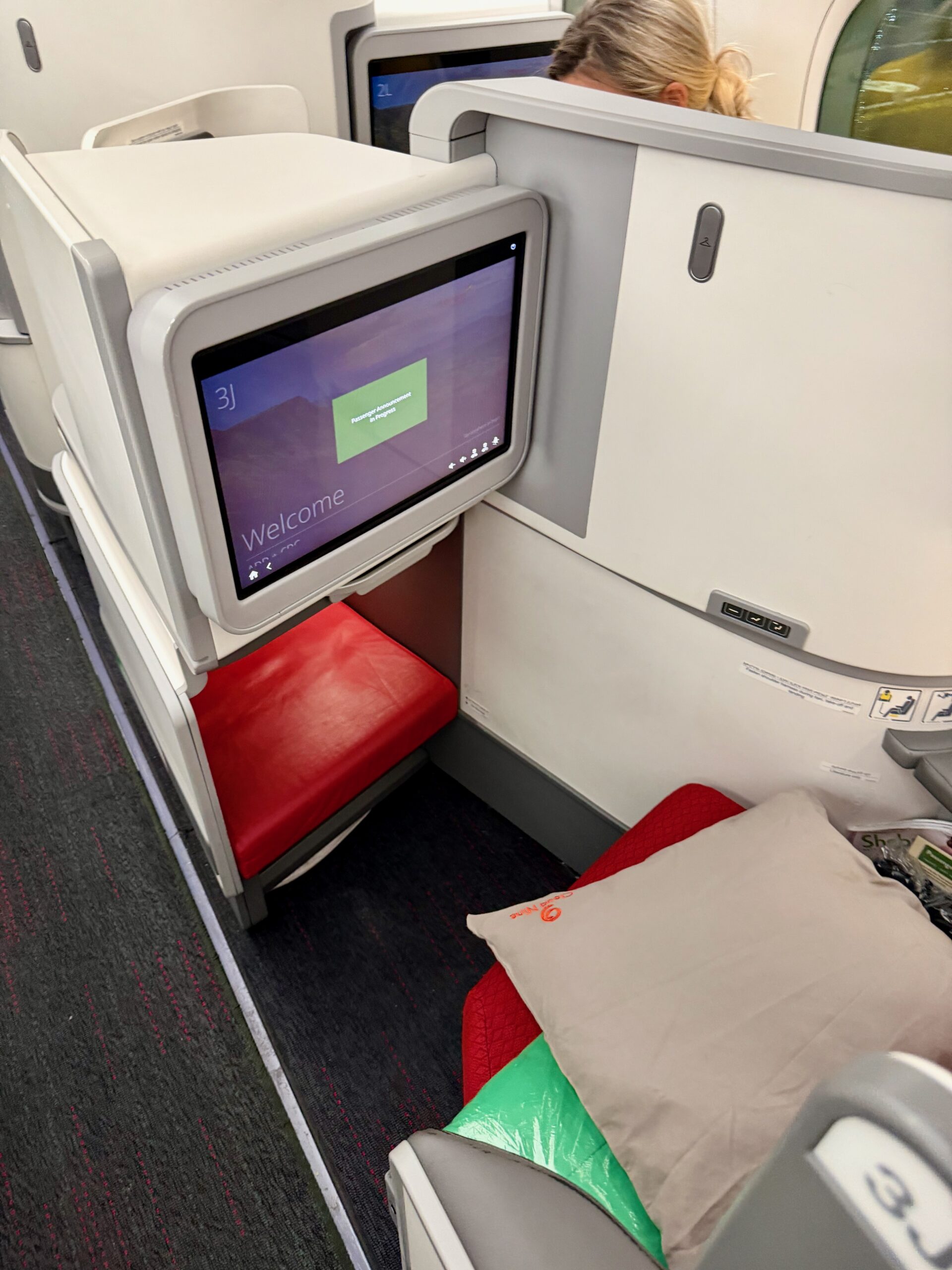
The Cloud Nine cabin is done out in Ethiopian’s traditional red and green, not to my taste, but not offensive either. What did surprise me was the seat’s condition: on an aircraft with less than a year of service, seat 3J already looked noticeably used. It’s a straightforward layflat seat with a personal screen, no further shenanigans. That matched what I’d expect from Ethiopian’s entry-level long-haul configuration rather than a flagship product. I slept well on the flight regardless.
Food and Service
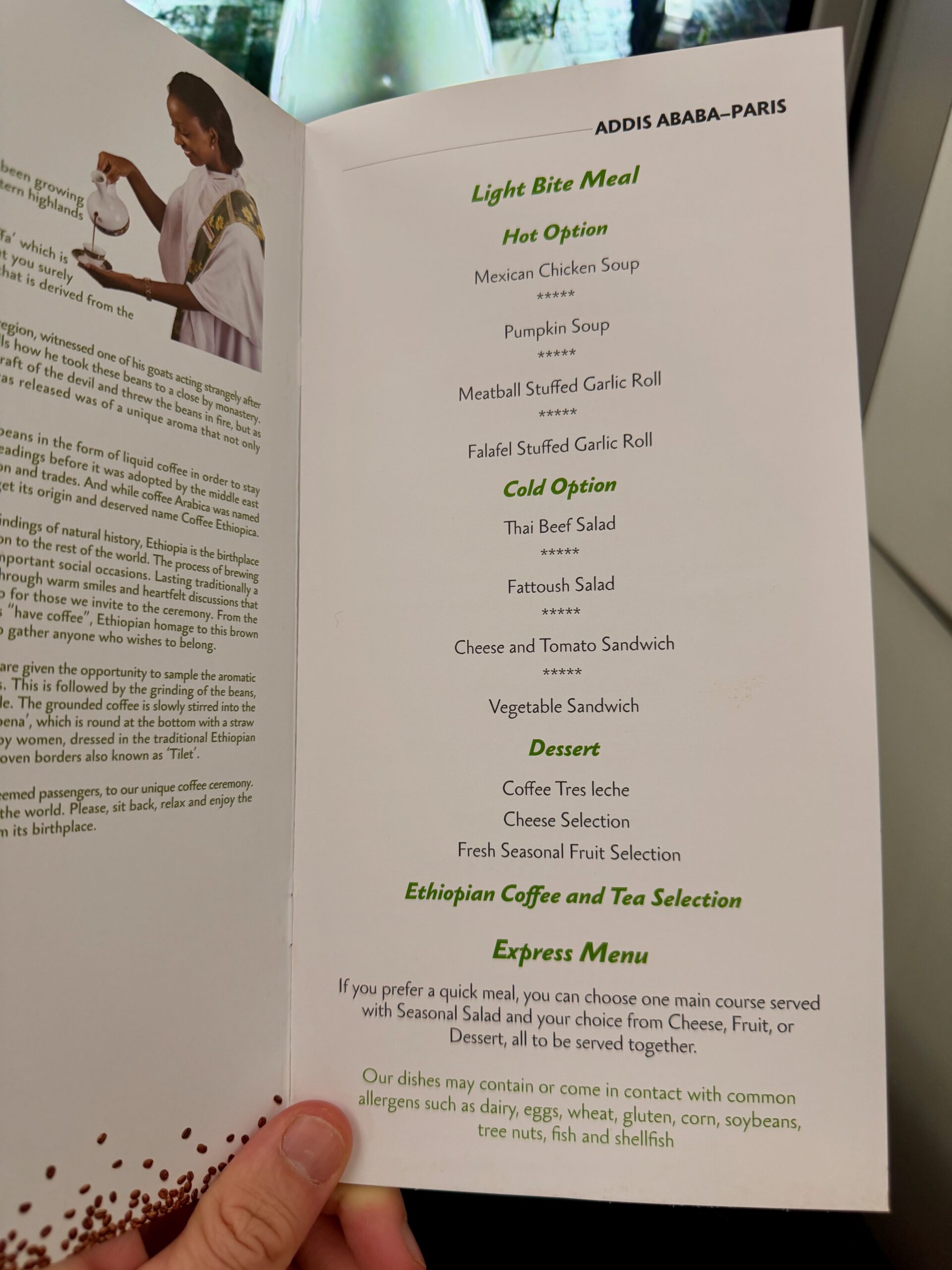
Our flight ran late, and crew used the extra time on the ground to hand out menus and take dinner orders before takeoff, a small silver lining. The champagne poured before departure was a nice touch. The menu itself was a combined outbound-and-return document, which was a confusing choice: the return-flight options were noticeably better, and having them printed right next to what I was actually being served felt like rubbing it in.
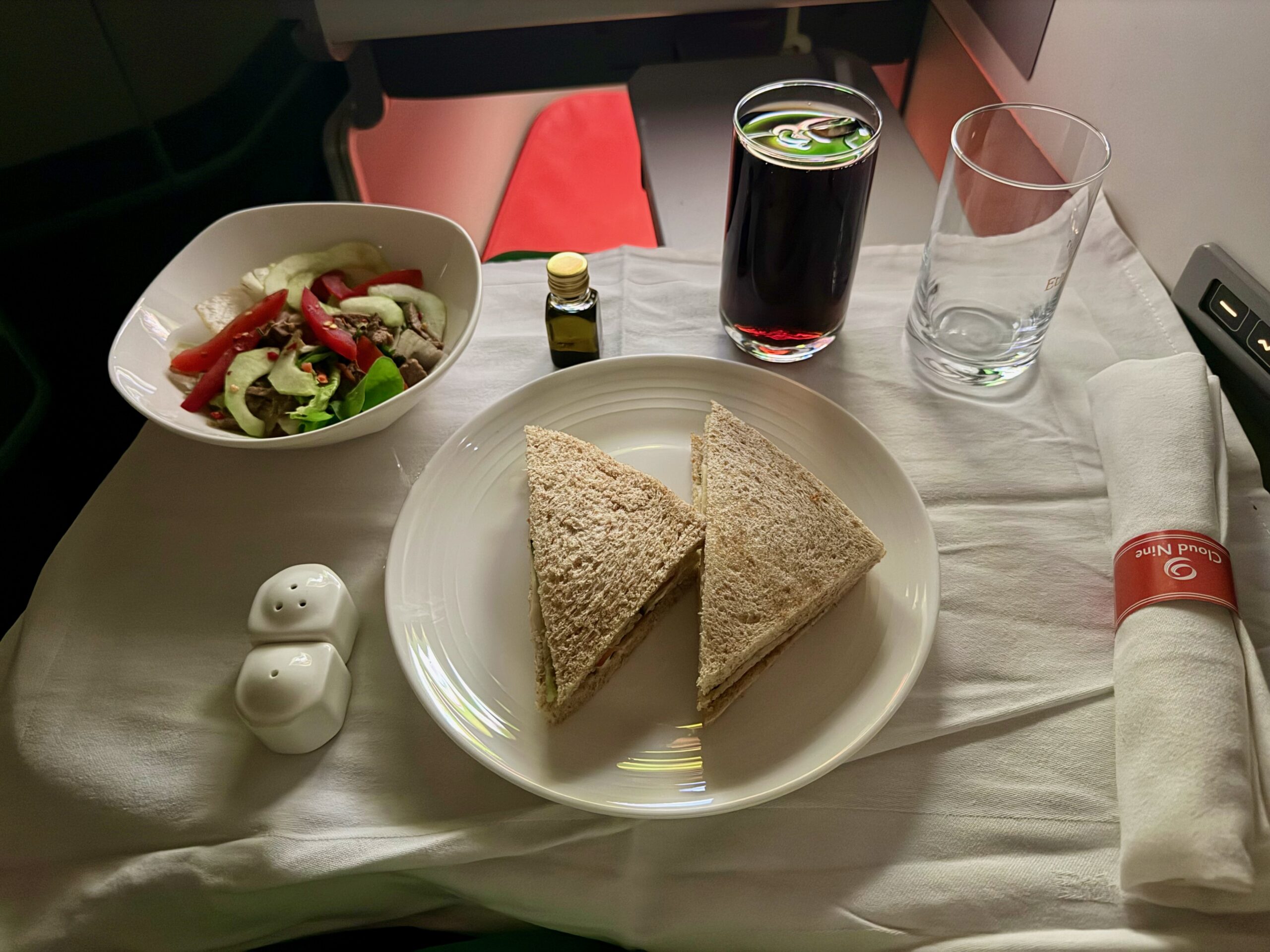
For dinner, the choice was between a warm dish and a cold plate; I went with the cold sandwich and a Coke, nothing memorable either way. Breakfast was a step up from dinner, though I’ve had better on other airlines. Service throughout was good, professional and attentive, but a clear notch below what Etihad delivered on our Singapore–Abu Dhabi–Frankfurt Business Class review: less warmth, less polish.


Pricing and Value
I flew this on a staff rate, so I can’t speak to what a cash fare feels like on the day. For reference, a public Business Class round trip between Addis Ababa and Paris runs roughly 650,000 birr (about €3,600 / $4,100), a fraction of what Qatar, Etihad, or Emirates typically charge for a comparable long-haul fare.
Check current Ethiopian Airlines Business Class fares on this route at Trip.com* before booking, prices move constantly, and this route is also served with one stop by Star Alliance partners like Lufthansa and Austrian, which are worth comparing on the same dates.
Where Ethiopian does make sense is price. If you just want a flat bed and a TV and don’t need the extra pampering, and you’re not chasing a specific stopover experience, the value is real. Without a staff rate, a card like the Amex Platinum* can help close some of that comfort gap elsewhere.
How Ethiopian Compares to the Gulf Carriers
Ethiopian is trying to position Addis, and eventually Bishoftu, as a real layover option between Asia and Europe. The new airport’s lower elevation and longer runways are built specifically to support more nonstop long-haul routes.
On product alone, though, it isn’t close to the Gulf carriers. Qatar Airways serves more than 150 destinations with a heavy focus on fast, efficient transit. Emirates runs one of the largest long-haul networks in the world out of Dubai. Etihad has a joint venture with Ethiopian for African connectivity and has been aggressively adding routes across Africa, Asia, and Europe. Ethiopian’s own growth is more selective: a handful of new strategic routes each year rather than the Gulf carriers’ broad hub-and-spoke expansion.
Ethiopian may pick up some of the current disruption affecting Middle Eastern carriers, but this product, as it stands, can’t compete with Dubai, Doha, or Abu Dhabi on comfort. I wouldn’t recommend Addis as a stopover destination the way I would any of those three.
Verdict
I landed smoothly into Paris and slept reasonably well along the way. This is a functional, no-frills Business Class product, not a bad one. Would I fly it again? It depends entirely on the price and the alternative. If there’s no direct option out of Frankfurt and neither Qatar nor Etihad serves the route I need, Ethiopian’s Cloud Nine is a sensible, price-sensitive choice. If a Gulf carrier is an option at a similar fare, I’d take that instead.

Frequently Asked Questions
Is Ethiopian Airlines Business Class worth it?
It’s worth it if price is your priority. You get a layflat seat, a personal screen, and decent service at a fare well below Gulf-carrier business class, but without the suite-style privacy or dine-on-demand extras those carriers offer.
What is the Cloud Nine Business Class seat like on the A350-1000?
The seat is a straightforward layflat with a personal screen, no extra privacy features, closer to Ethiopian’s entry-level long-haul configuration than a flagship product. On our aircraft, delivered less than a year earlier, it already showed noticeable wear.
Is Addis Ababa a good stopover city?
Not currently, compared to Dubai, Doha, or Abu Dhabi. The lounge and transit experience are functional but don’t match the Gulf hubs. That may change once Bishoftu International Airport opens in phases from 2030.
How does Ethiopian Airlines Business Class compare to Etihad or Qatar?
On price, Ethiopian wins clearly. On product and service polish, it’s a step behind: our Etihad Business Class review found noticeably warmer, more attentive service on a similar long-haul route.
When will Ethiopian’s new airport open?
Bishoftu International Airport, roughly 40 kilometers from Addis Ababa, broke ground in January 2026. Ethiopian expects the first phase to open in 2030, with capacity eventually rising to 110 million passengers a year.
*Affiliate links: If you book or apply through these links, Urban Escape Stories may earn a commission. This is one way the site supports itself, and it does not affect what we write.