On our Frankfurt to Boston day flight, Condor Premium Economy gave me the extra foot and leg space I wanted for nearly eight hours in the air. At 195 cm, I could sit comfortably, the separate cabin felt calmer, and the food was more generous than I expected.
I would book it again when the fare gap to Economy is reasonable. Sleep is where I would be more careful: this is still a reclining seat, and my recommendation comes from a daytime crossing.
Our flight was in 2025. The fare examples below were checked in June 2026 for September 2026 travel; they are historical comparisons, rather than prices you can book today.
Flight details
- Route: Frankfurt (FRA) to Boston (BOS)
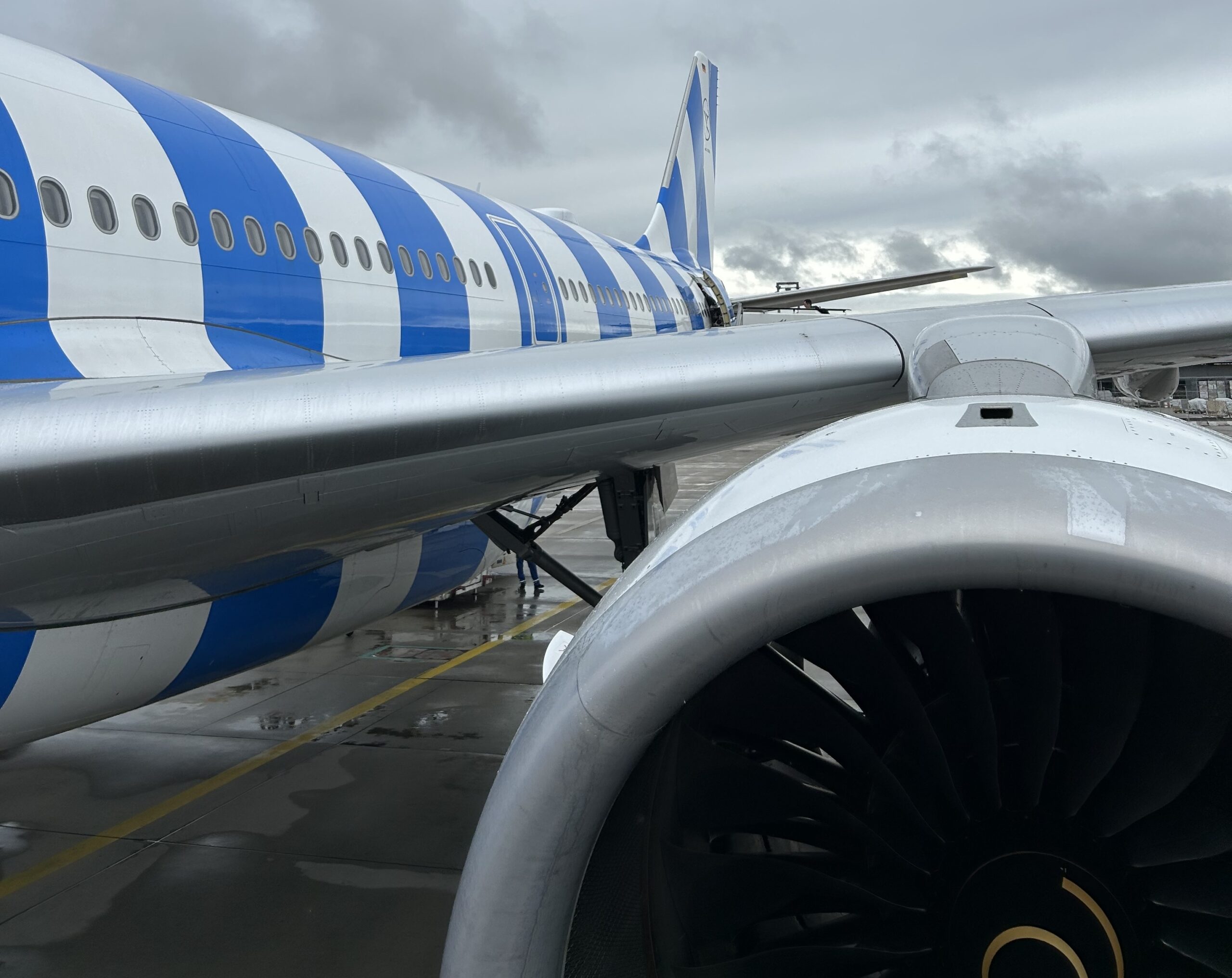
- Aircraft: Airbus A330-900neo
- Cabin: Premium Economy
- Flight time: about 7 hours 45 minutes
- Booking: cash ticket
Links marked with an asterisk are affiliate or referral links. If you book or apply through them, Urban Escape Stories may earn a commission or referral reward. This does not affect our review.
Condor Economy vs. Premium Economy on the A330neo
The biggest difference for me was the space around my legs and feet. The cabin looked fresh, and sitting in the separate Premium Economy section made the flight feel calmer than sitting farther back. Storage was fairly standard.
Condor’s A330neo cabin specifications show where the extra room comes from:
| Seat feature | Economy | Premium Economy |
|---|---|---|
| Seat pitch | 76 cm | 89 cm |
| Backrest recline | Up to 8.5° | Up to 12° |
| Adjustable headrest | Four-way | Six-way |
The seat still reclines rather than turning into a flat bed. If sleep is the reason you are spending more, compare the Business fare as well.
On the Boston route, Premium Economy also includes a premium meal service and alcoholic and non-alcoholic drinks. Condor currently lists one checked bag of up to 32 kg for flights to or from the USA and Canada. Check the current Premium Economy inclusions for your route and fare; Economy baggage allowances depend on the ticket selected.
The fare gap matters more than the headline price
In our June 2026 check for nonstop Frankfurt–Boston round trips in September 2026, the fares looked like this:
| Cabin | Historical round-trip fare |
|---|---|
| Condor Economy | About €570 |
| Condor Premium Economy | About €840 |
| Lufthansa Premium Economy | About €1,701 |
| Condor Business | About €2,800 |
We also found Condor Premium Economy at roughly €875 for a round trip starting in Boston. These were sample fares from that check, not the amount we paid for our 2025 flight.
The Frankfurt departure showed a €270 round-trip gap between Condor Economy and Premium Economy. At that level, I would consider the extra space and included food and drinks worthwhile for a daytime crossing. It is an example of how I would weigh the upgrade, rather than a fixed price threshold.
For your own dates, compare the final totals, including baggage and any seat reservation you want. Search flights at Booking.com*, then select the cabin and check the fare conditions before booking.
Condor currently lists Premium Classic, Premium Choice and Premium Flex. They share the Premium Economy cabin, but their change and cancellation terms differ. Check Condor’s fare overview rather than paying more for flexibility you will not use.
Frankfurt check-in and lounge access
Our flight used the C-area check-in at Terminal 1, followed by gate B60 and bus boarding. Security in that B concourse was down to one lane when we arrived, which slowed things down. The ground experience felt less comfortable than the flight itself; I would leave plenty of time, especially with checked luggage.
Condor’s Frankfurt departure information currently lists Terminal 1, Departure Hall C. Check your booking and the airport information again before travelling, particularly for a 2027 trip: Condor plans to move to Terminal 3 for the summer 2027 schedule.
Our Premium Economy ticket did not include lounge access. Condor currently offers lounge access as a separately bookable extra, so budget for it separately if you want it.
Amex Platinum is another way eligible cardholders can access participating lounges. Entry depends on registration where required, the lounge’s rules, capacity and the card’s current visit limits. Check the Amex lounge terms and the current Amex Platinum offer* before making it part of your airport plan.
Food, drinks and the rest of the flight
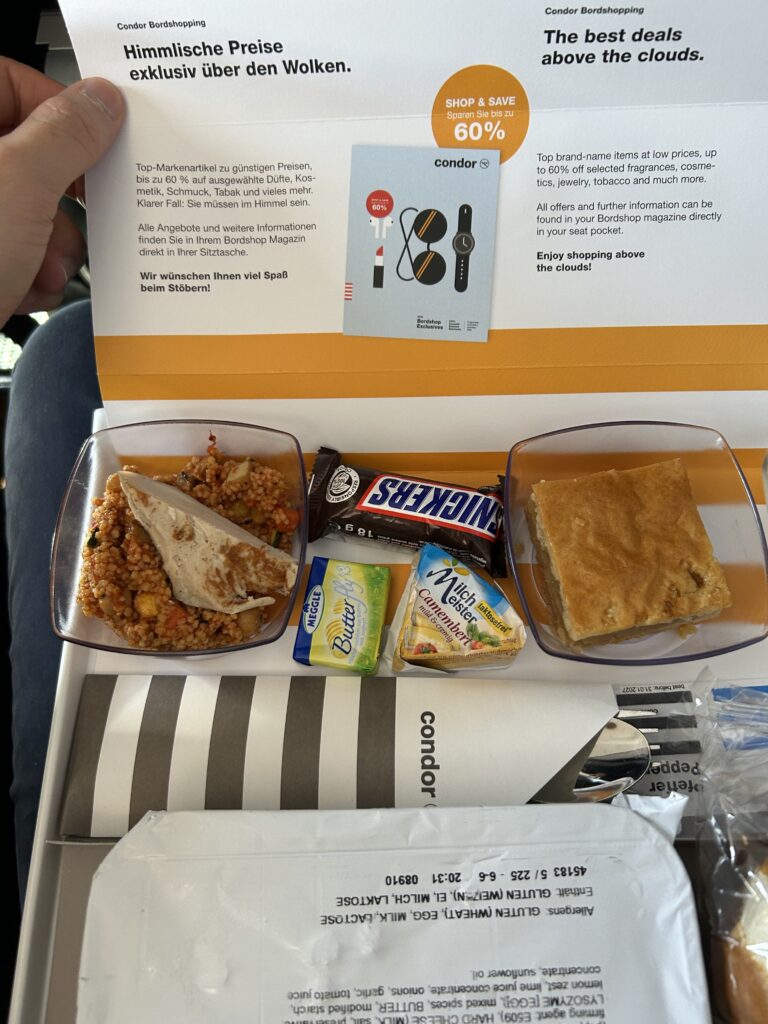
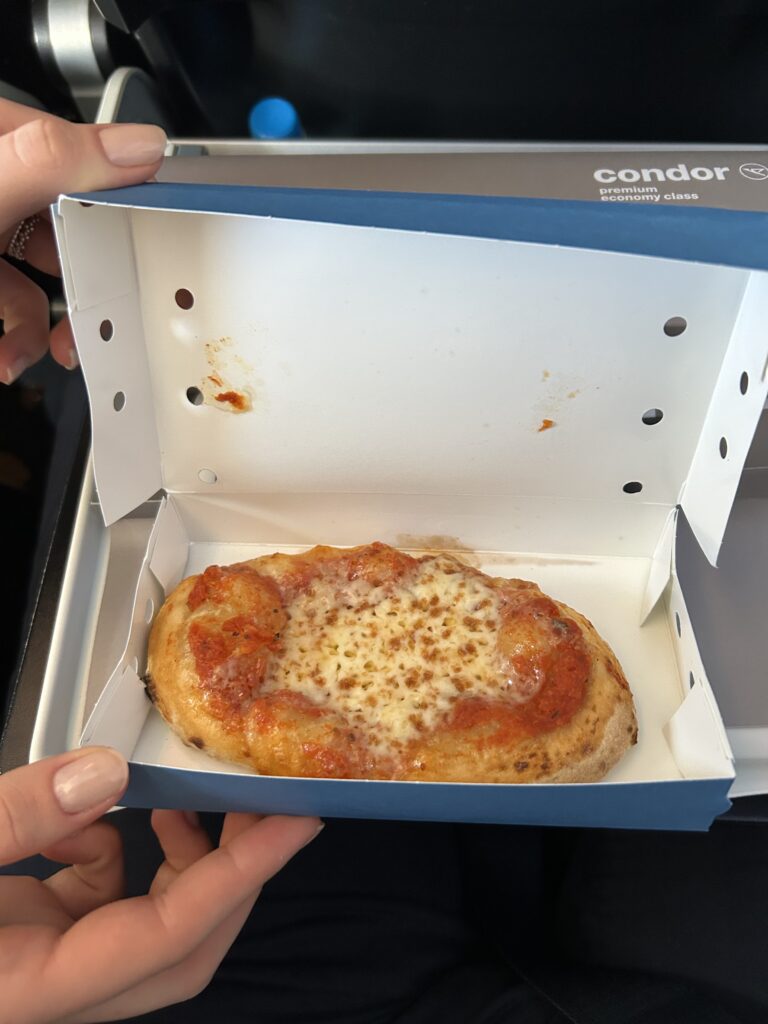
Shortly after takeoff, we were served a tray with a starter, hot main and sides. Our main was Italian spinach gnocchi with asparagus and lemon cream sauce. There was a light snack during the flight and a hot mini pizza before landing.
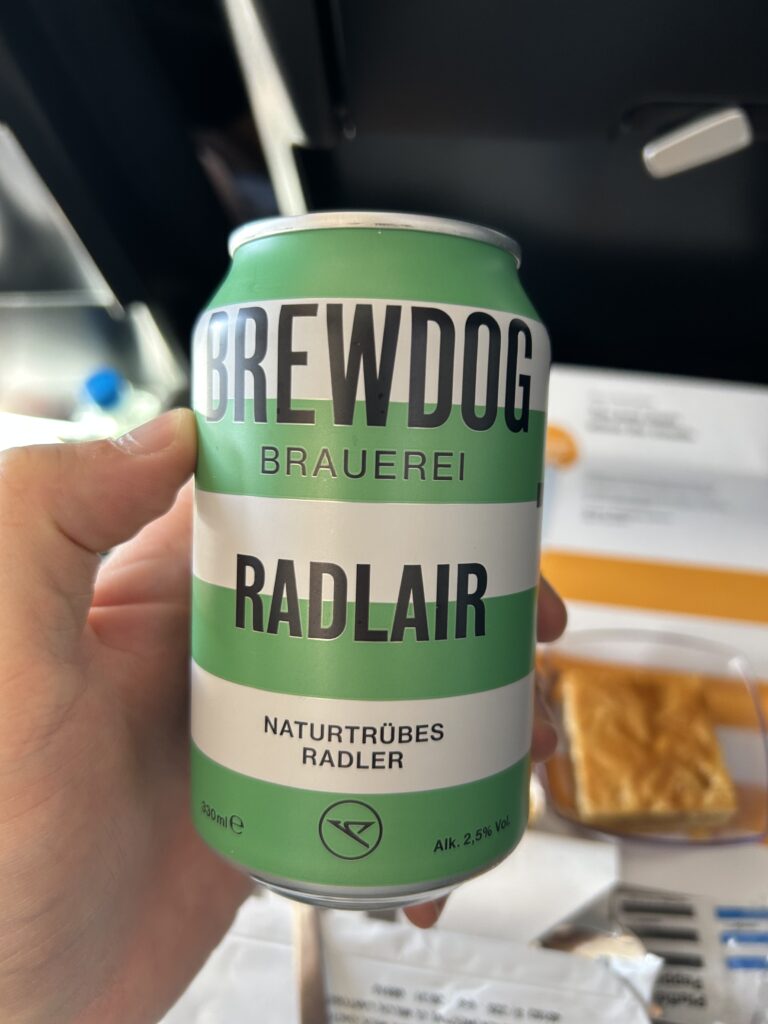
The quantity was the pleasant surprise. For a crossing of about seven hours and forty-five minutes, we had enough food without the service feeling rushed. Beer, wine and spirits were included, and the BrewDog x Condor drinks were a detail I liked.
The crew were efficient and friendly. Despite the bus boarding and slower security at Frankfurt, service ran smoothly once we were in the air. The entertainment system had enough to watch for the crossing; paid Wi-Fi was available, but we skipped it.
Would I book Condor Premium Economy again?
Yes, on a daytime transatlantic flight with a reasonable gap to Economy. The extra leg space mattered at my height, and I appreciated the fuller meal service and included drinks. The Frankfurt ground experience was the weaker part.
For an overnight flight where sleep matters most, I would either save the money or move up to Business.
Practical questions
Does Condor Premium Economy include lounge access?
It did not on our ticket. Condor currently lists lounge access as an add-on, so check the options for your departure airport separately.
Is the seat suitable for a tall passenger?
At 195 cm, I had enough leg and foot space to sit comfortably on our daytime flight. That is a sitting-comfort observation, rather than an overnight sleep test.
Are the prices in this review current?
The table records a June 2026 fare check for September 2026 dates. Use it to understand the cabin price gaps we saw, then search your own dates for a current quote.
If Boston is the start of a longer trip, our New England road trip itinerary covers the route beyond the airport. For the step up to Business, compare our Lufthansa 747 upper-deck review and Qatar Airways 787-9 Business Suite review. Our Lufthansa A340-600 First Class review covers a different cabin again.