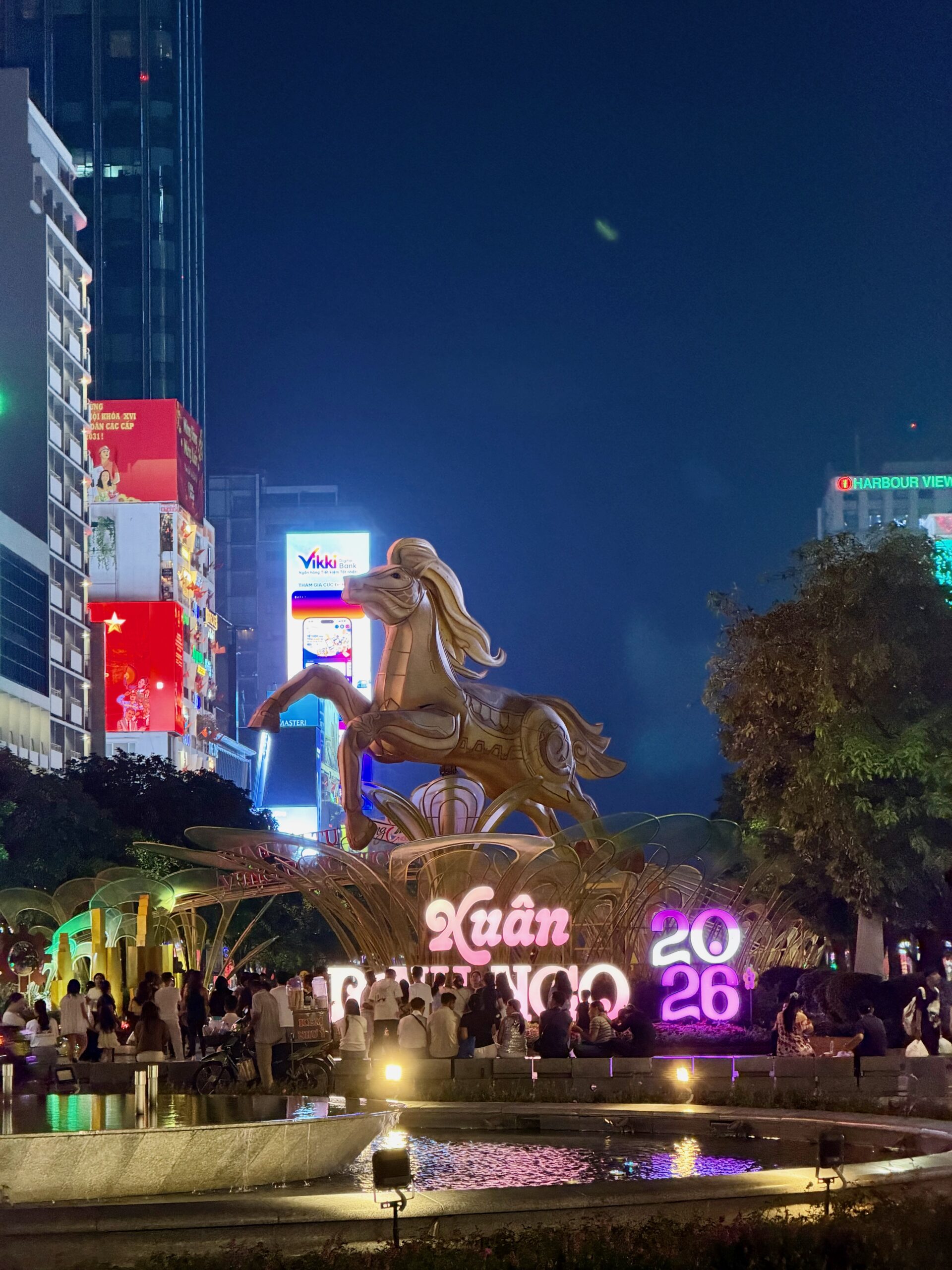
By the time the Grab reached Thai Van Lung, it was already clear that Saigon was not going to feel like Hanoi. The ride from Tan Son Nhat airport to District 1 took 43 minutes for barely nine kilometres, through evening traffic that moved differently from the north. Hanoi had narrow lanes, slow coffee and a city that asked you to adjust to it. Saigon announced itself with wider streets, malls, high-rises, LED signage and a pace that felt more international from the first hour.
That contrast was the point. Saigon was the last stop of our Vietnam route after flying down from Da Nang and spending two nights in Hoi An; Hanoi had been the first stop, and we had worked our way south from there. Both bigger cities had something that the stops in between did not: daily life felt like it was continuing around you, not being arranged for you.
This is a first-timer’s guide for three nights in District 1, based on a March 16-19, 2026 visit: a base on Thai Van Lung, Grab as the default transport, a compact food and cafe list, the War Remnants Museum, and a tailor who made a three-piece suit work in 48 hours.
If you are planning the same north-to-south route, read this together with my 3 Days in Hanoi guide. The two cities make more sense when you let the contrast do some of the work.
This route works best if you want a central first-time Saigon stay with strong food, cafe stops, one serious museum visit and enough practical detail to avoid overplanning.
Why Saigon Works Differently
Hanoi and Saigon are often compared as if they are simply the north and south versions of the same city. They are not. Saigon feels more western, or at least more international, in a way that is immediately visible from the car on arrival. The skyline is different, the streets are wider, and the city is easier to read if you are used to large modern Asian cities.
Saigon is not the postcard version of Vietnam many visitors build from Hanoi, Hội An or Ha Long Bay. It is faster, more commercial and more visibly modern, but that is exactly why it belongs on a first trip.
That does not make it less interesting. The food and coffee culture were still excellent, and the city felt less tourist-shaped than Hoi An, Ninh Binh or Ha Long Bay. Like Hanoi, Saigon works best when you let normal city routines become part of the trip: short Grab rides, coffee stops, one serious museum visit, and meals that are more about rhythm than checklist ticking.
Three nights is enough for a first visit. It gives you two full days plus arrival and departure time, which is enough for the main stops without trying to turn the city into a spreadsheet.
Where to Focus Your Time
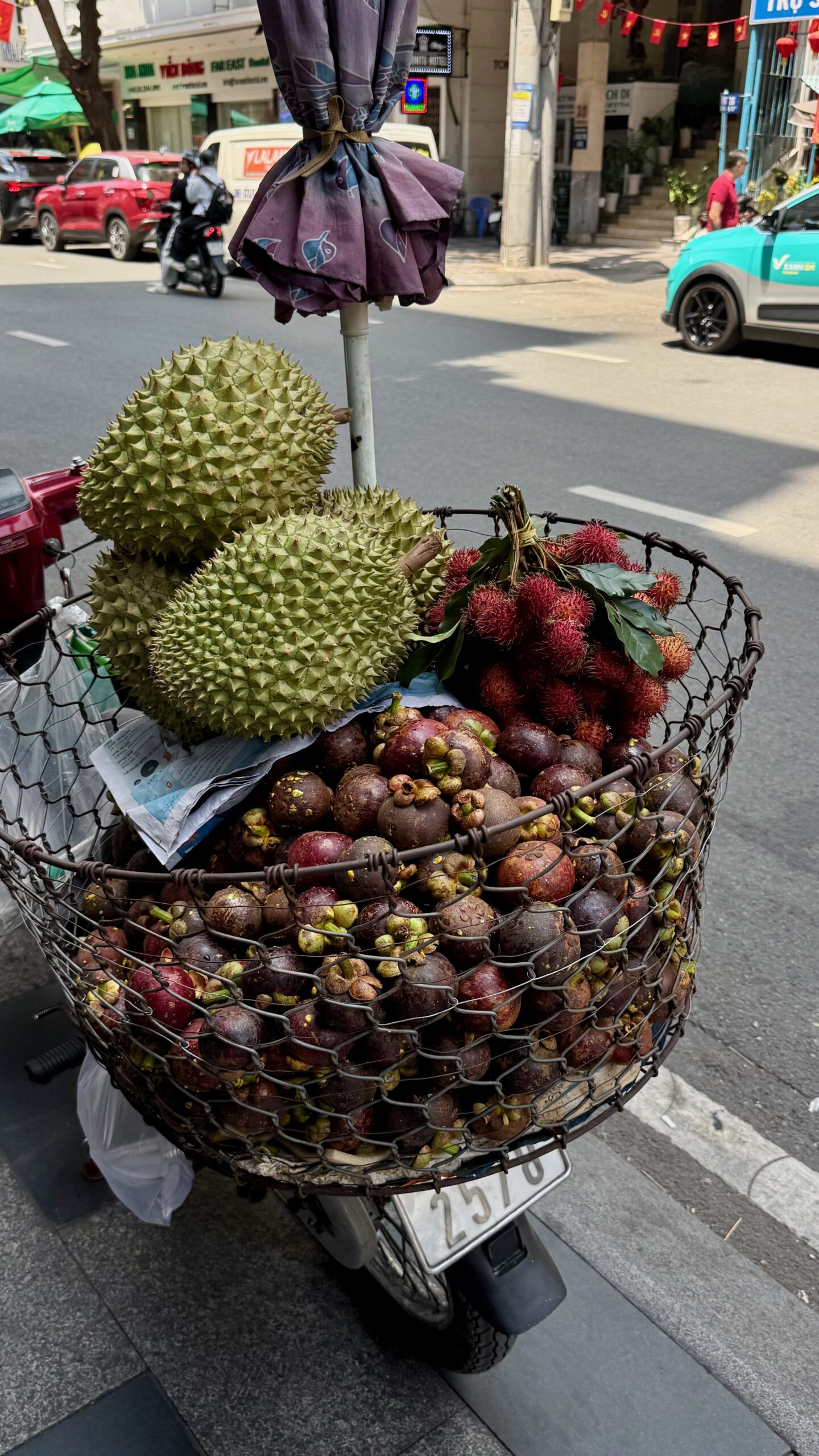
District 1 is the sensible base for a first Saigon trip. It puts you within easy Grab distance of the War Remnants Museum, Bến Thành Market, the Cafe Apartment building on Nguyễn Huệ, and most of the food stops in this guide. Thai Van Lung worked well as a central street: close enough to useful areas, but not somewhere I would describe as a destination by itself.
I would treat Bến Thành as an orientation point rather than the centre of the trip. The better version of Saigon came through side streets, cafes, restaurants and short rides across District 1 rather than through the market itself.
A Compact 3-Night Saigon Route
Arrival Evening: Bến Thành and First Pho
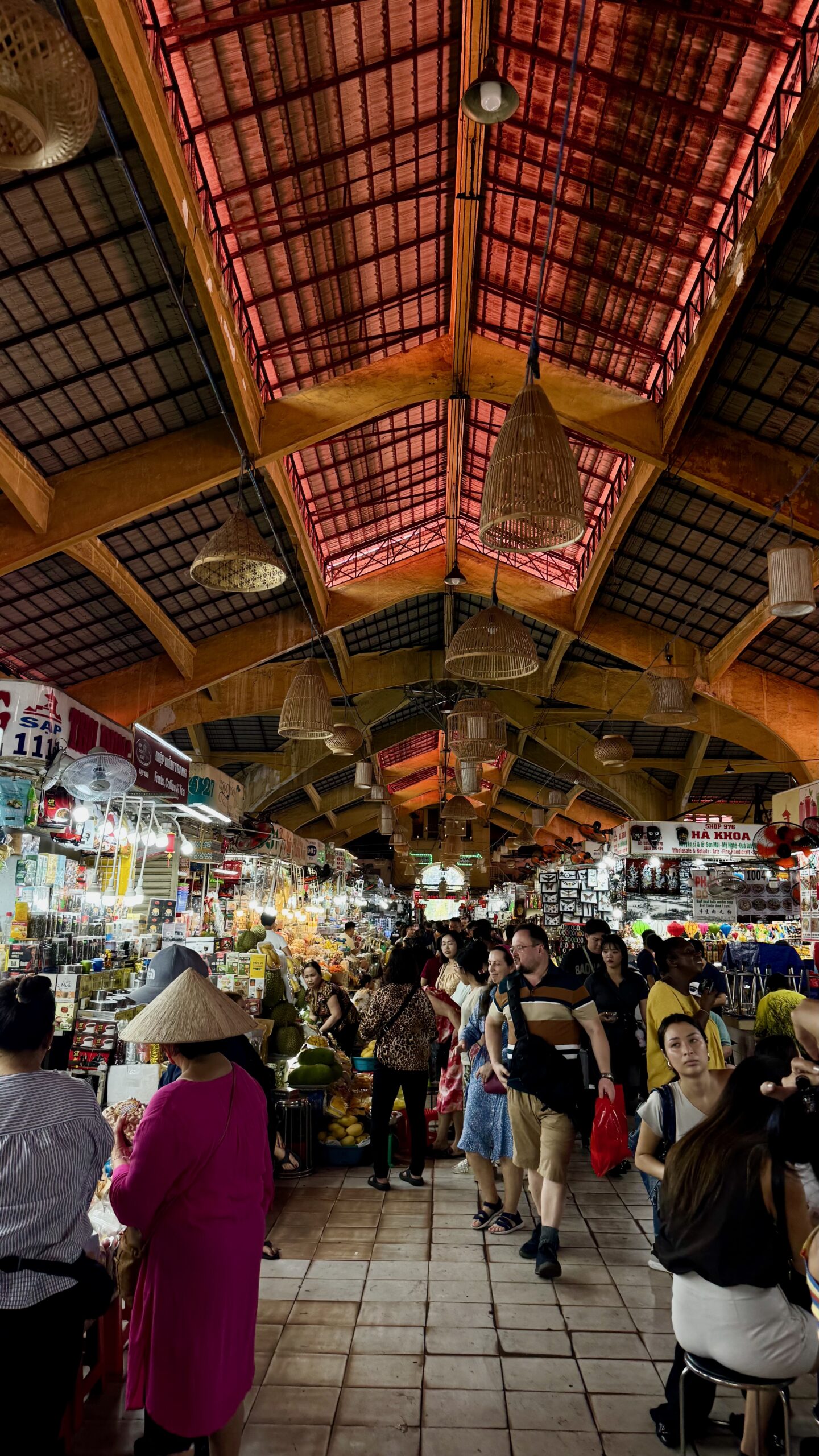
The first evening works as orientation: arrive, check in, then walk the blocks around Chợ Bến Thành to understand how the neighbourhood moves. The market is worth a single pass on foot as a landmark, but I would not build much shopping time around it.
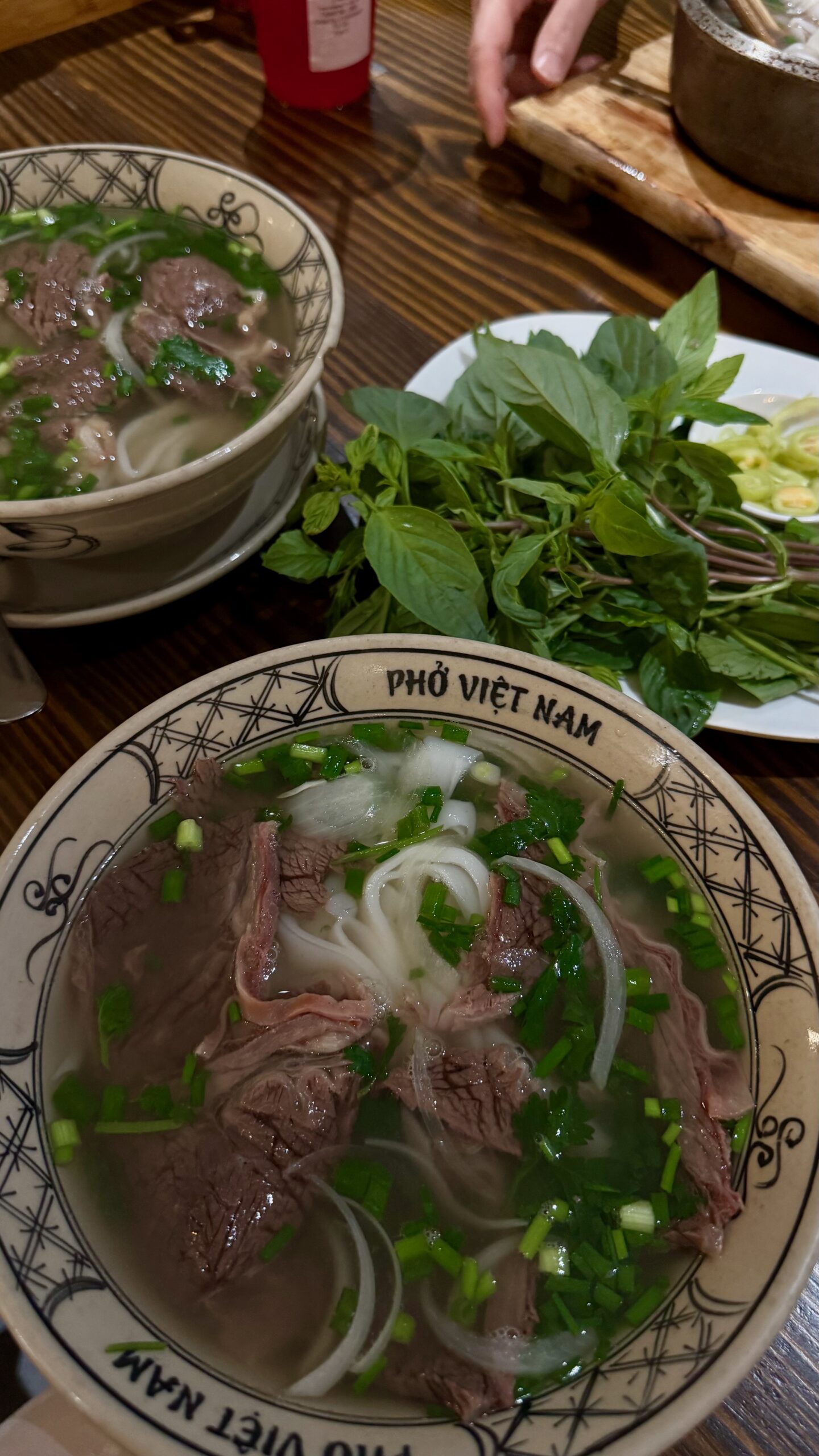
For a first food stop, go to Phở Việt Nam at 14 Phạm Hồng Thái. It is listed in the Michelin Guide, very busy, and not a quiet sit-down experience. The restaurant runs across multiple addresses on the same street, so do not be confused if staff send you a few doors down. Share tables, do not expect calm, and eat. The pho is worth the noise.
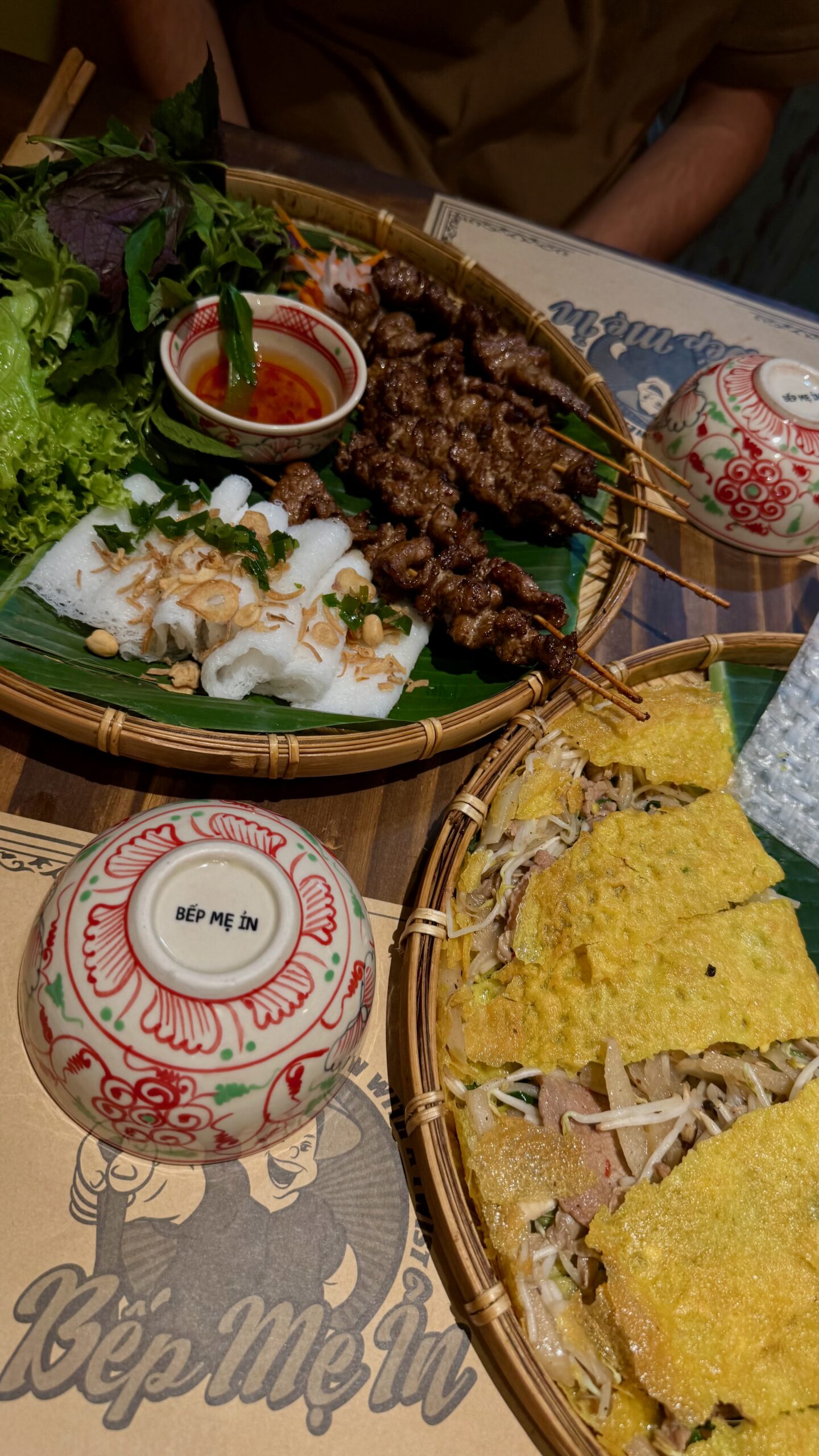
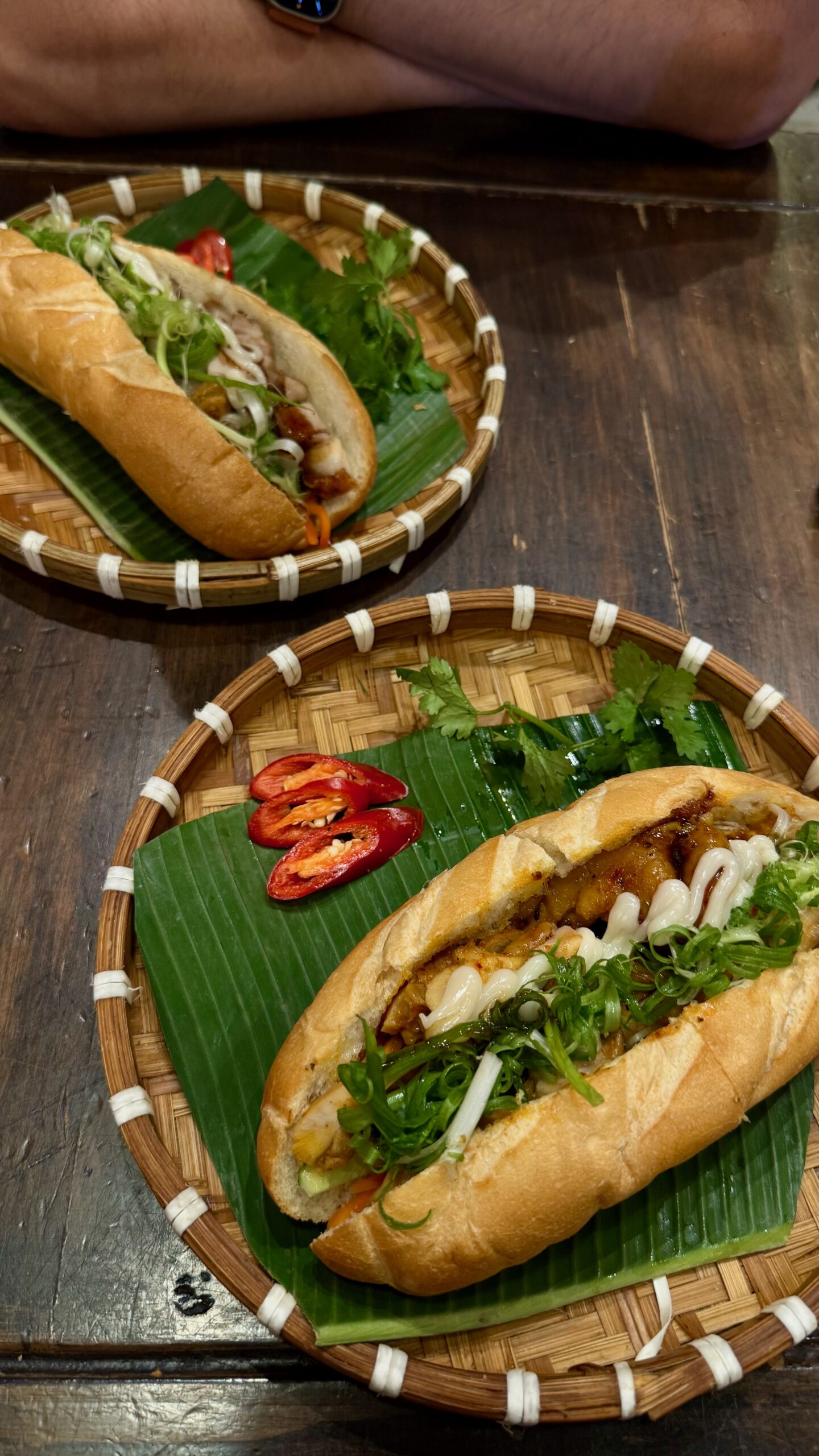
If you want a more comfortable dinner nearby, Bếp Mẹ Ỉn and Bánh Mì Mẹ Ỉn are by the same group and sit close to Bến Thành. Bếp Mẹ Ỉn is a Michelin Bib Gourmand pick, and the Vietnamese pancake is the order I would repeat. Bánh Mì Mẹ Ỉn next door is the bánh mì version of the same idea; follow your taste, because the options are strong. If the staff offer to show you how to eat the pancake properly, take them up on it.
Full Day 1: War Remnants Museum, Matcha and Mặn Mòi
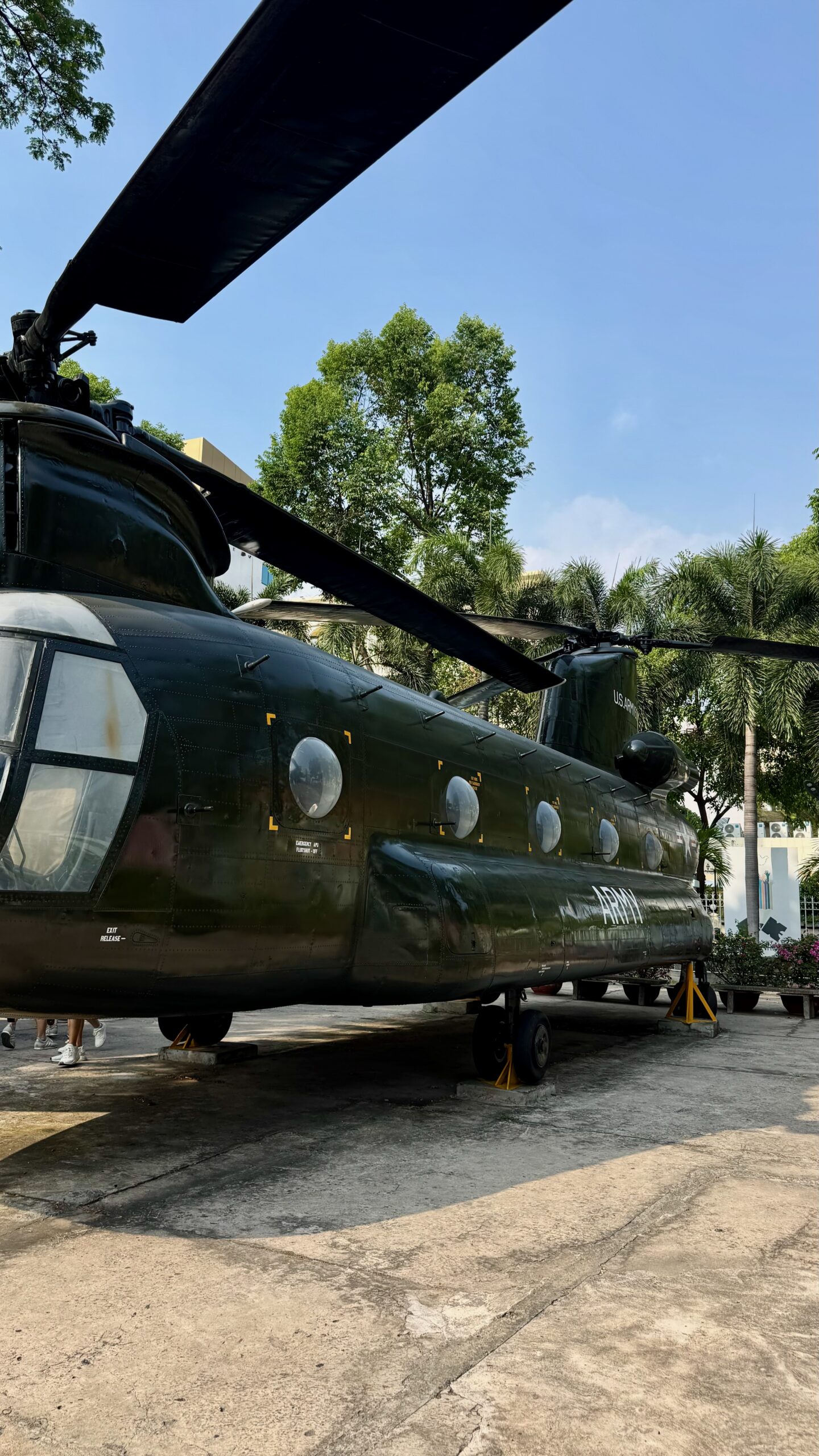
Start the morning at the War Remnants Museum at 28 Võ Văn Tần. This is worth a full morning. The museum documents the colonial period and the Vietnam War from the Vietnamese perspective, with photographs and written accounts that are difficult to sit with at times. The history most Western visitors know is told from a particular direction; this is the other one. Plan at least 90 minutes and do not rush it.
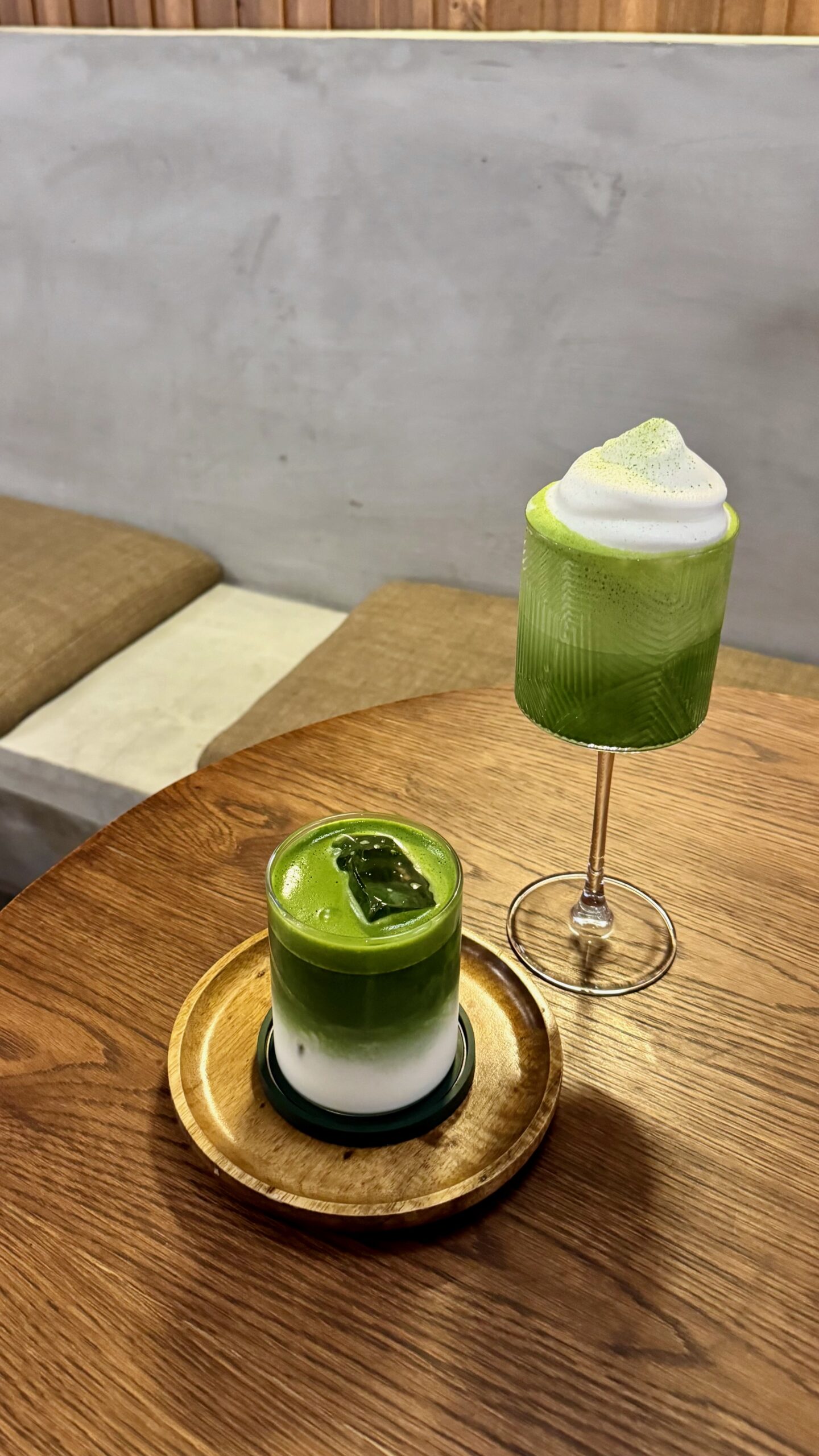
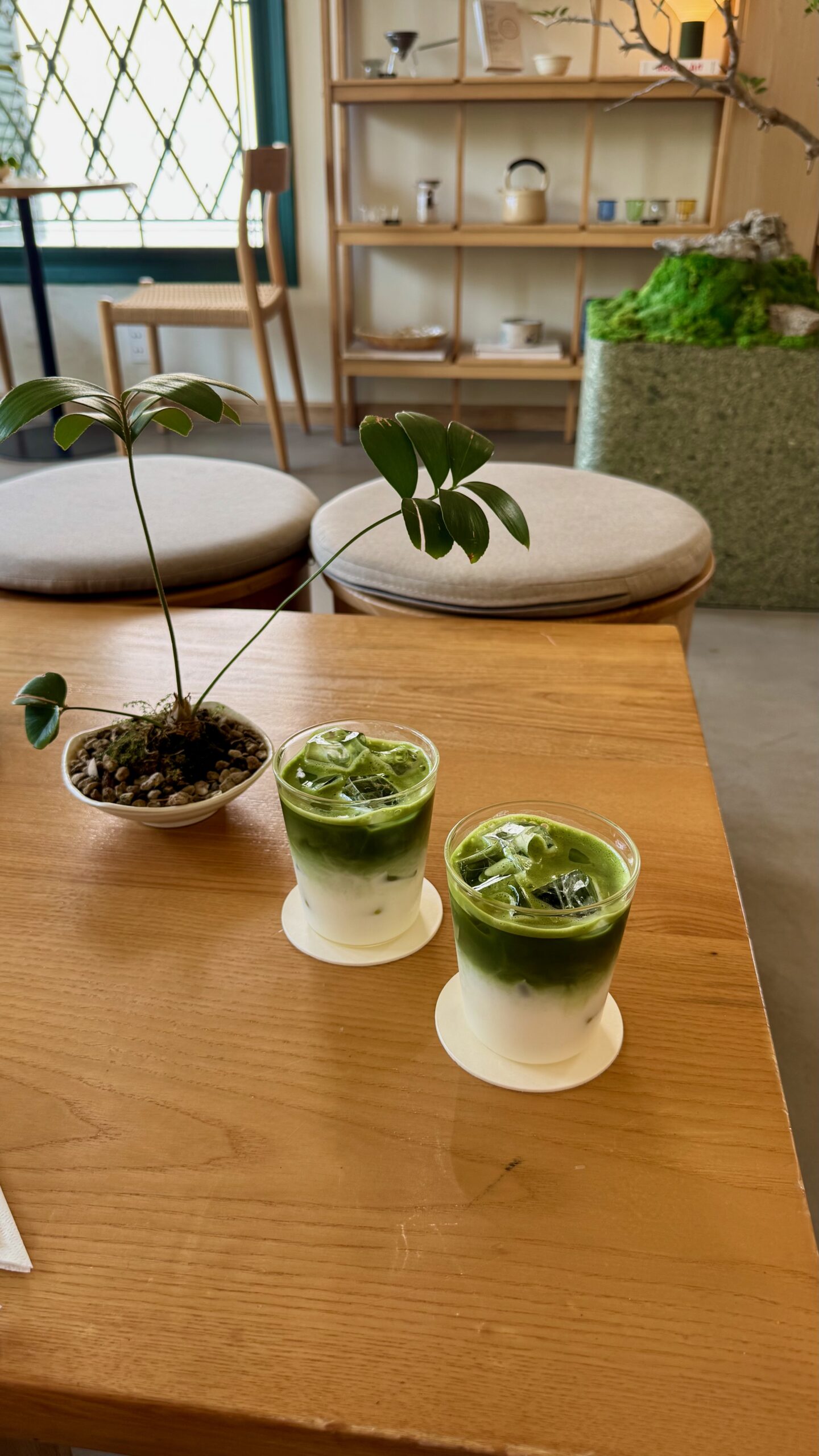
In the afternoon, Saigon’s specialty cafe scene becomes more obvious. Kocha Matcha Spot is worth a stop for a cloud matcha latte; the interior is sharp and the drinks were well made. Tea Space at the Bến Thành branch is more hidden away, with a calm design and reliable matcha lattes. Saigon’s cafe culture is not just Vietnamese coffee. Matcha and specialty tea have clearly found their place here as well.
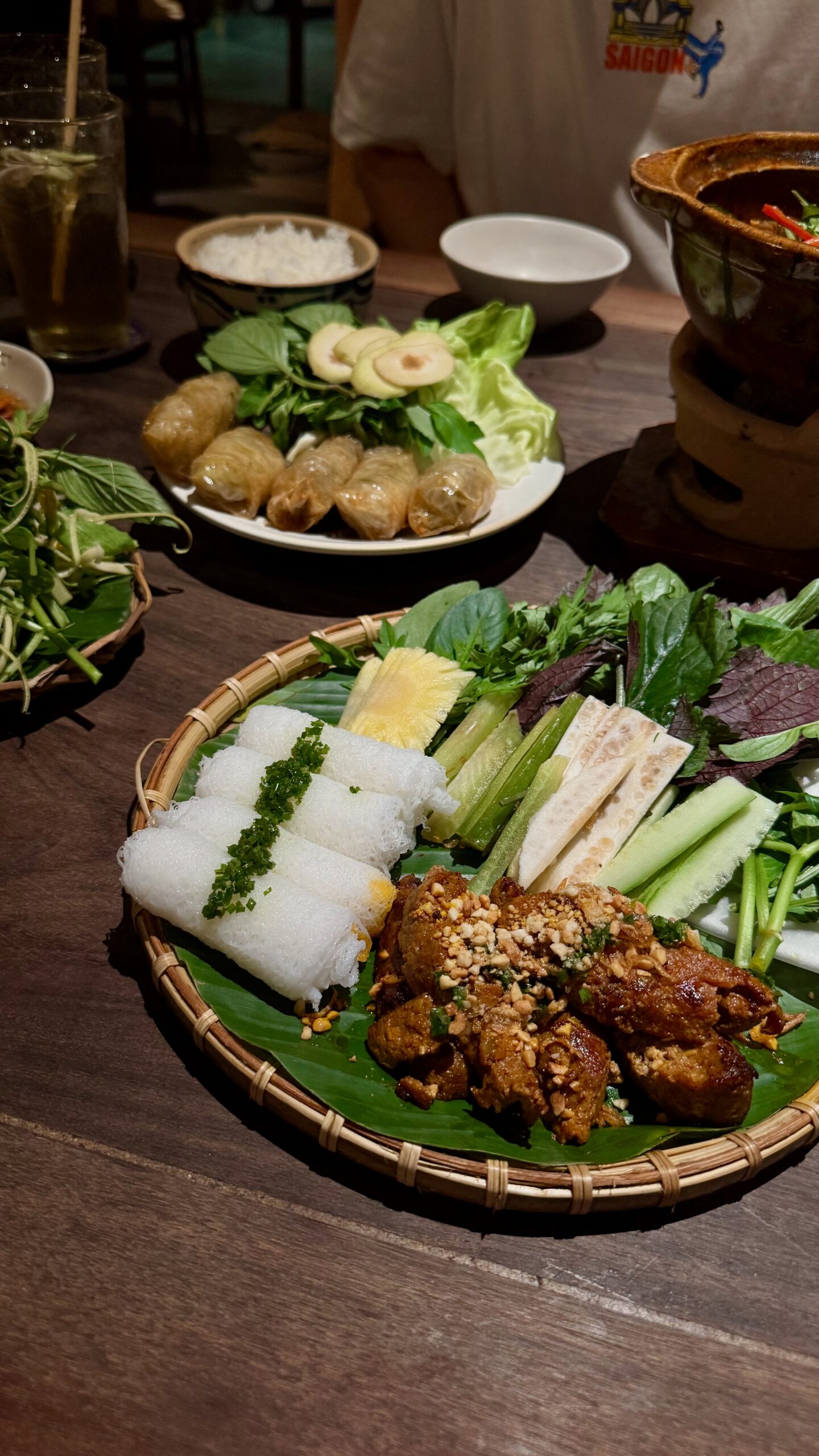
For dinner, Mặn Mòi is a Michelin Bib Gourmand restaurant with a proper evening-out feel. The menu moves through regional Vietnamese cooking rather than one narrow category, and there is also a vegetarian restaurant by the same owner in the building if that is useful. I do not remember every dish clearly enough to pretend otherwise, but the meal worked as a fun, slightly dressier date night.
Full Day 2: A+C Coffee, Tailoring and Pizza 4P’s
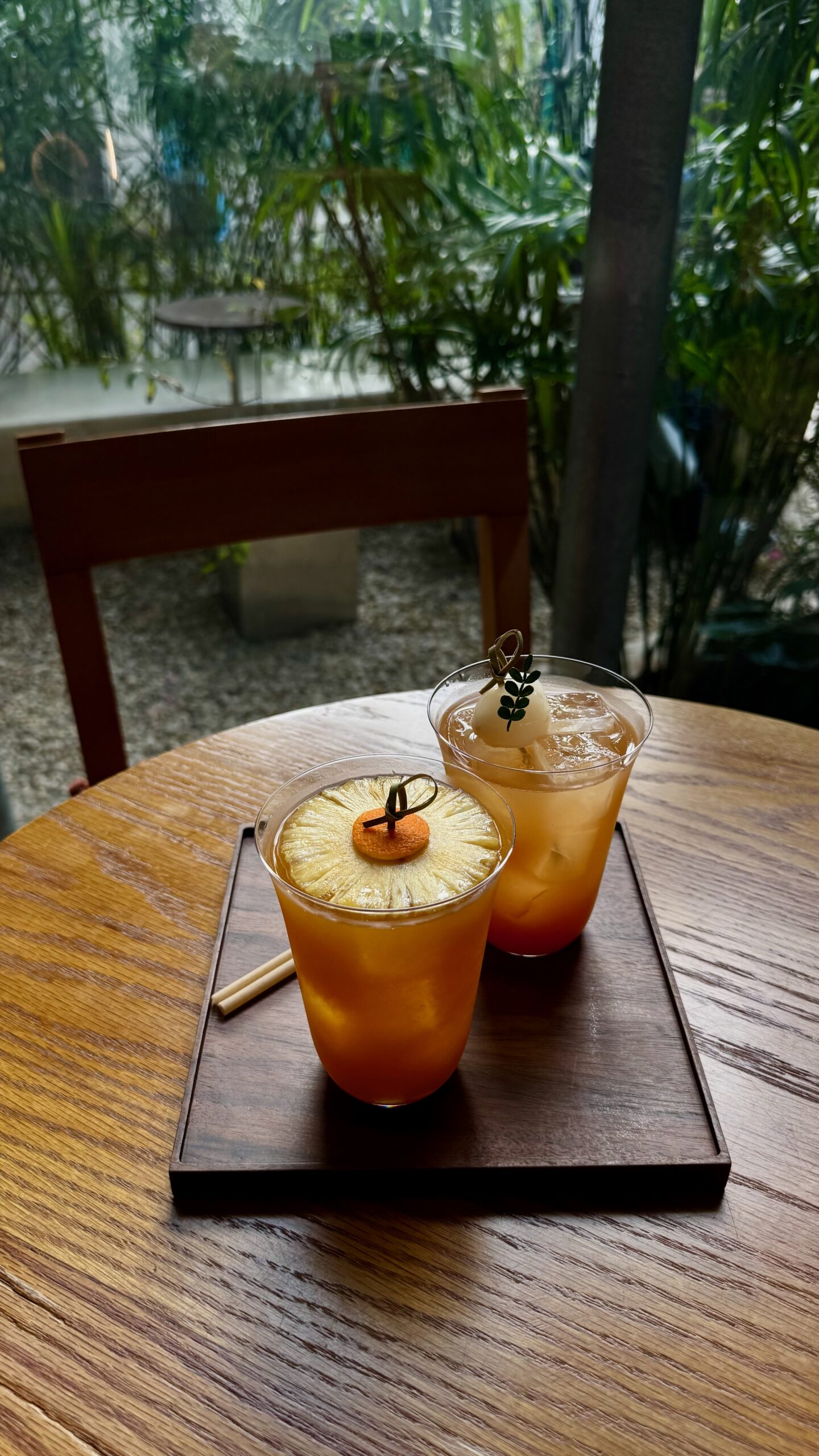
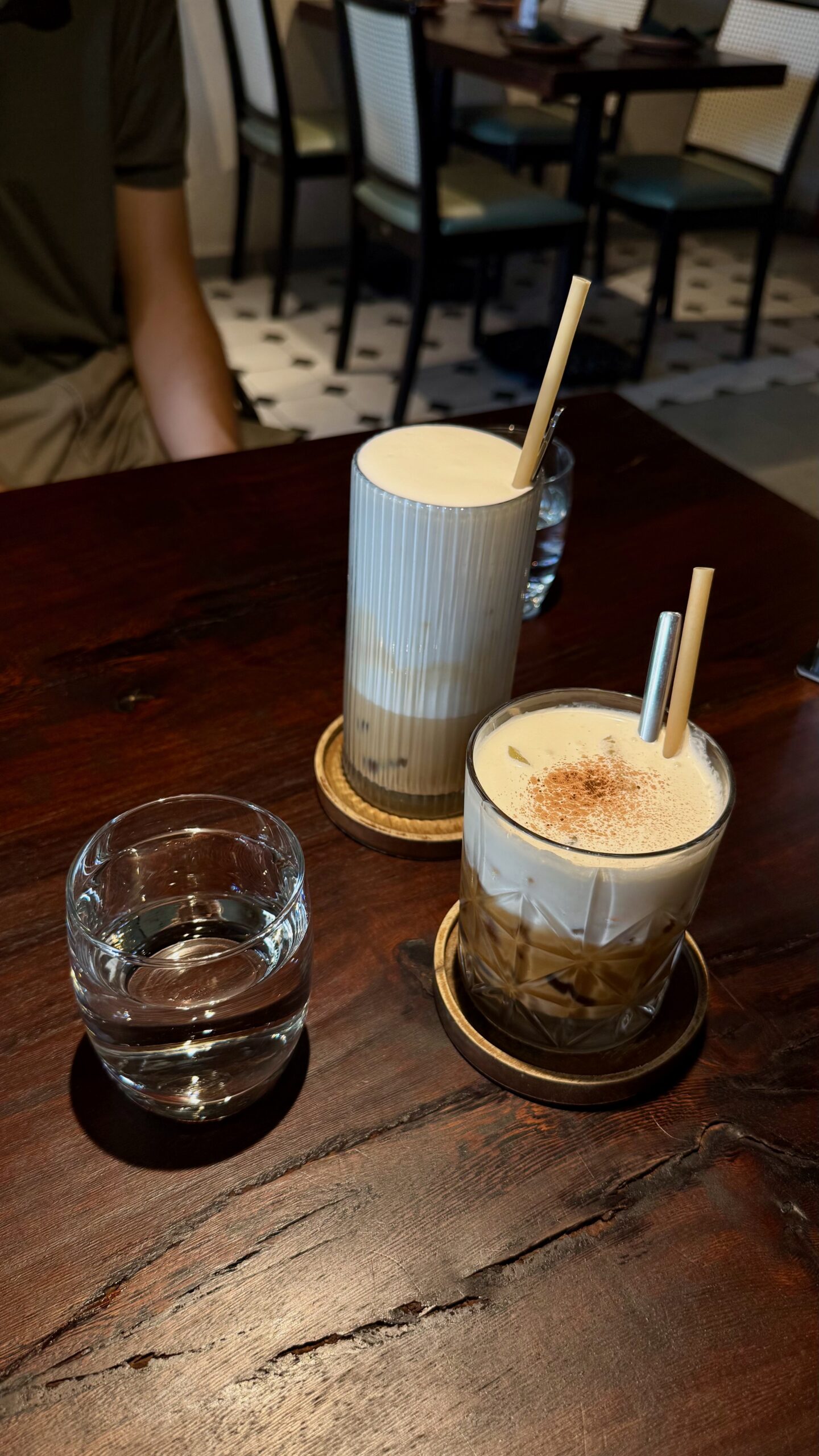
Use the morning for A+C Coffee Experience. It is large, with upstairs seating that makes it work for a longer stop or laptop time. The cold teas were excellent. One of the speciality drinks was not really my thing, but the menu is broad enough that I would still keep it on the list.
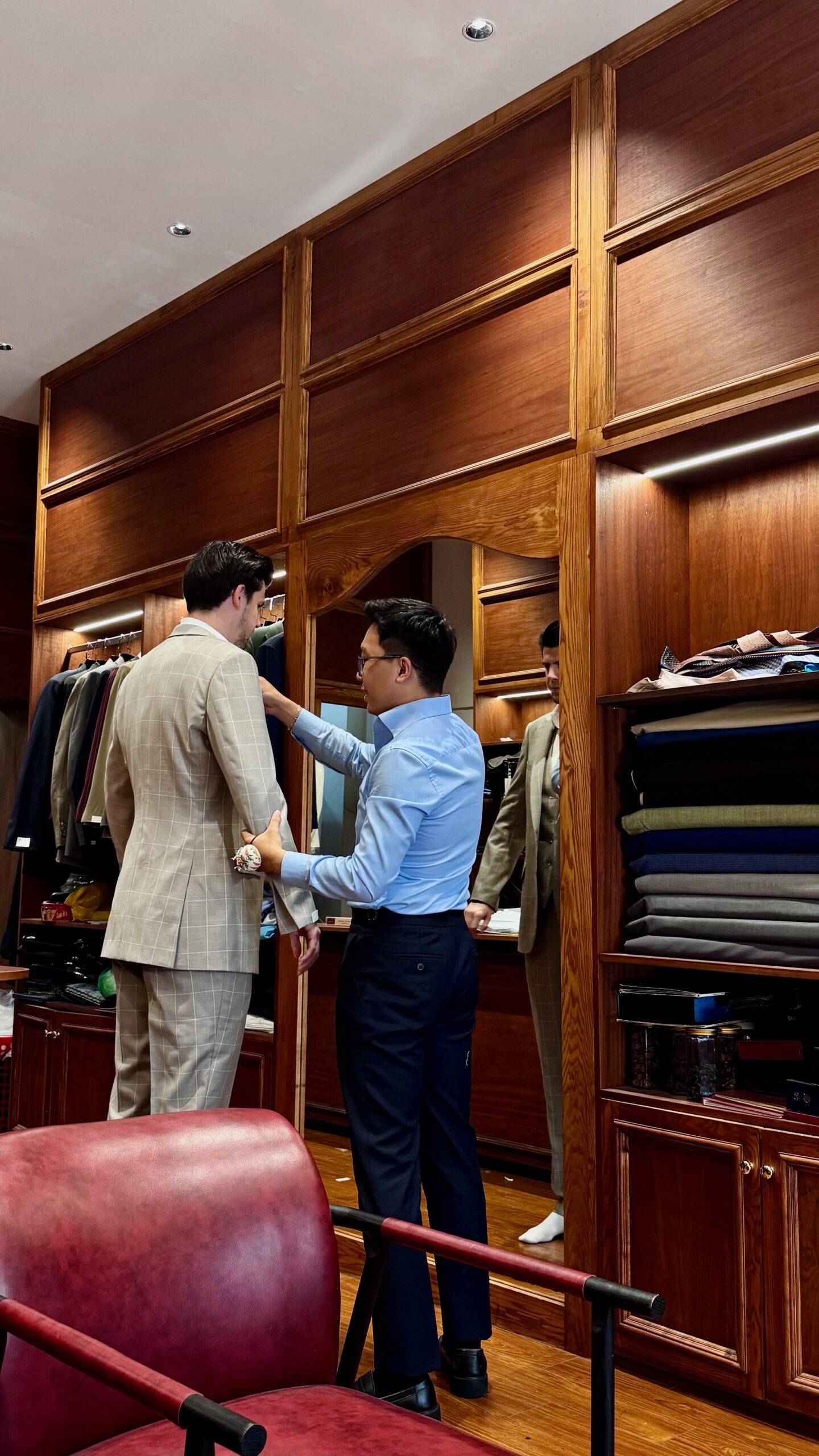
If getting a suit made is on your list, do not leave it to the final afternoon. I went to Binh Tailor and was very happy with the result. A three-piece suit came to around 25 million VND, roughly €815 / $950 using approximate late-May 2026 rates, and they made the timing work in 48 hours. Full canvas construction needs more time than that, so be clear about what is realistic before you start.
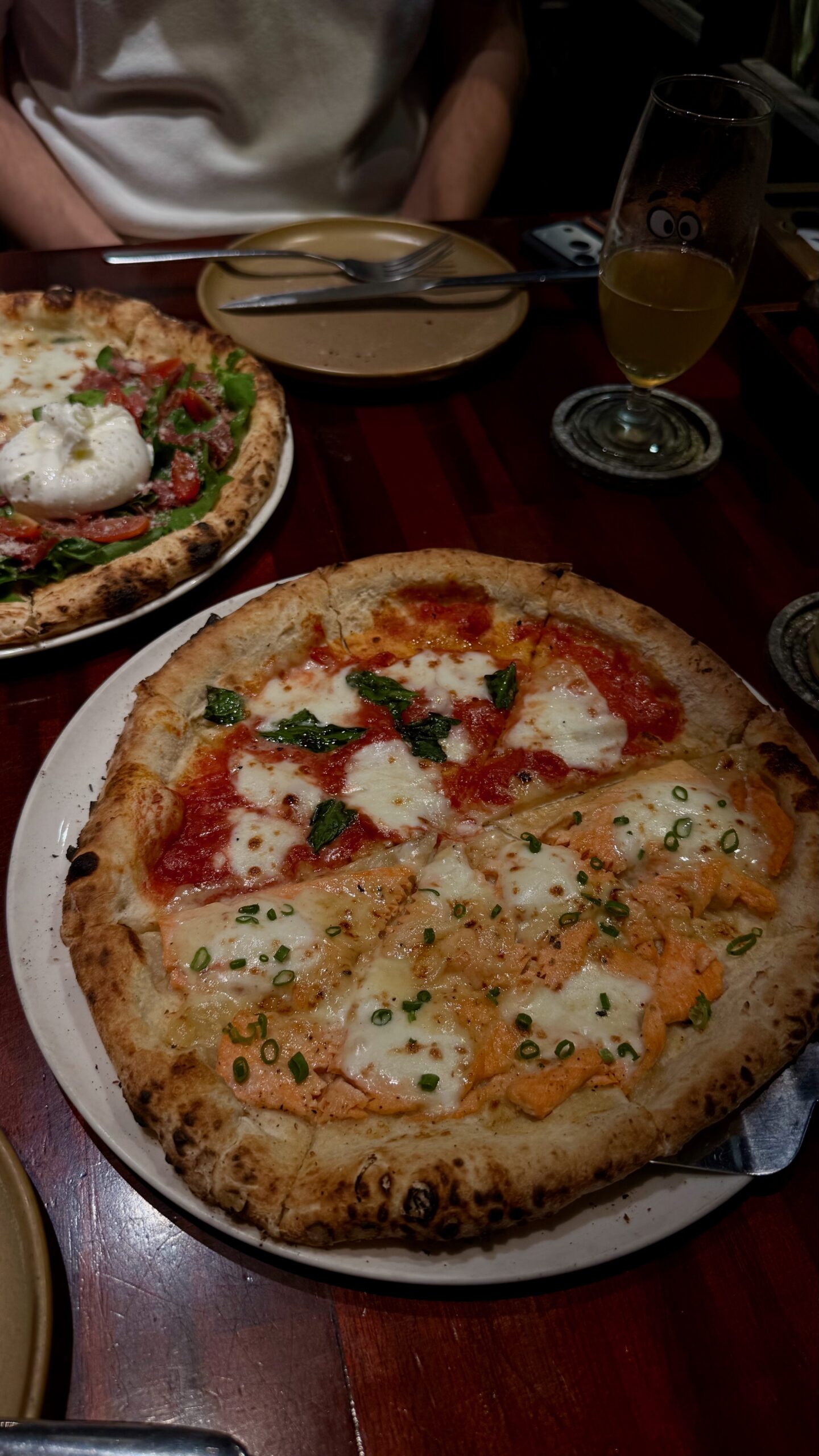
For the evening, Pizza 4P’s makes sense if you want one break from Vietnamese food without feeling like you gave up on the city. We had started the Vietnam trip with Pizza 4P’s in Hanoi, so ending there felt right. Use the half-and-half pizza format and reserve if you can; these restaurants are popular for a reason.
Departure Morning: The Cafe Apartment and a Last Coffee
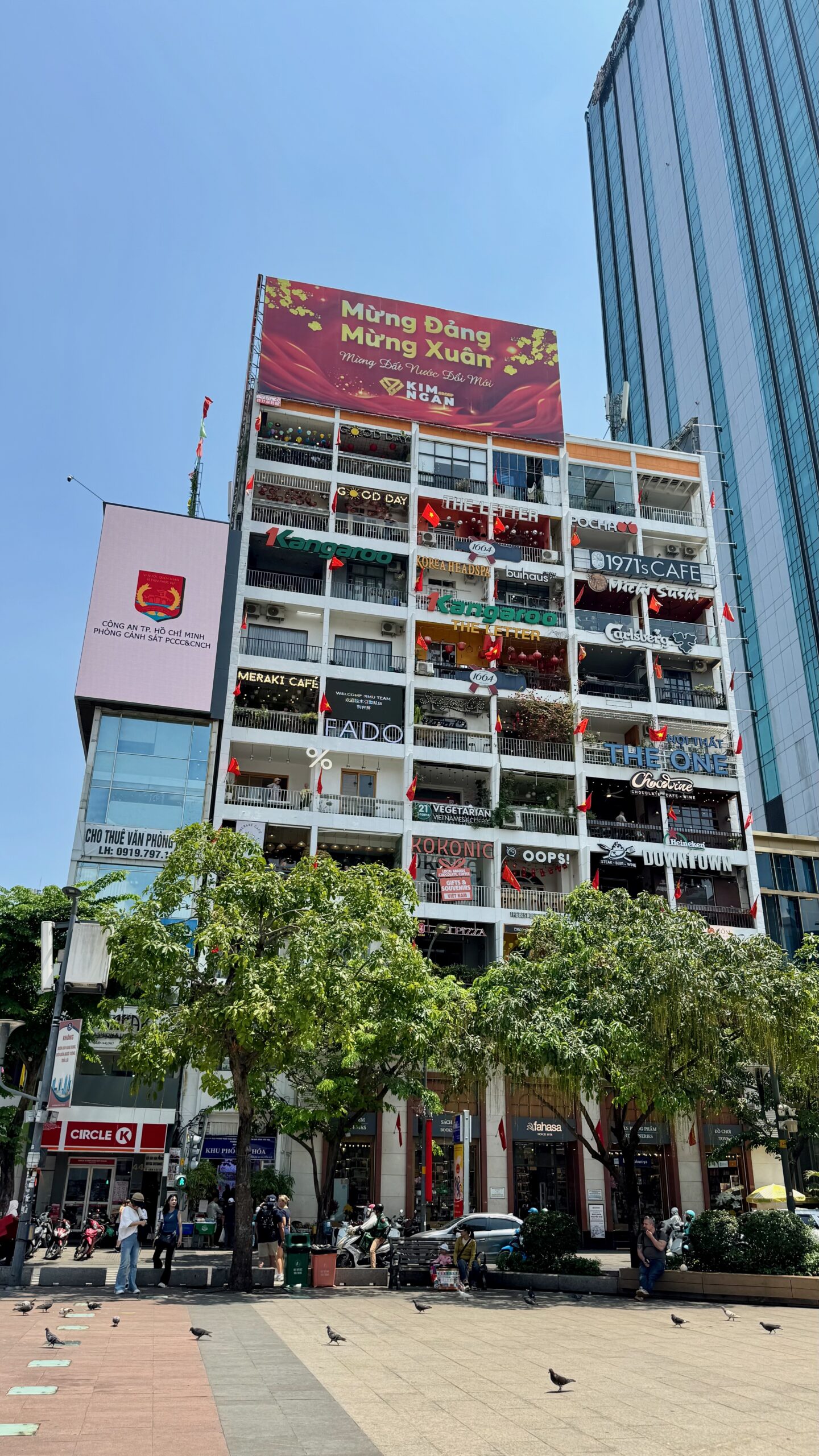
The building at 42 Nguyễn Huệ, usually called the Cafe Apartment, is worth a final morning stop. It is a former apartment block that has become a stack of cafes, small shops and balcony views over Nguyễn Huệ. Take the elevator for a tiny fee, or use the stairs if you want to browse floor by floor. %Arabica is a reliable choice, but the better move is simply to explore and pick whatever balcony or room feels right.
If you booked tailoring, use the morning to collect the suit before heading to the airport.
Hot Beans Coffee on Thai Van Lung is a good last stop if you are staying nearby. I did not pick it out before the trip; it was close to the hotel and became our final coffee before the airport. We had a white coffee with foam and a latte. The room is comfortable, the place is bigger than expected, and the breakfast looked genuinely good. We had already eaten at the hotel. That was probably the wrong order.
Coffee and Food Stops Worth Your Time
A+C Coffee Experience: Large space with upstairs seating, useful for a longer pause or laptop time. The cold teas were the highlight; the speciality menu is broad, even if not every drink will be for every palate.
Kocha Matcha Spot: Cloud matcha latte, good interior, worth saving if matcha is a priority.
Tea Space, Bến Thành branch: Slightly hidden, nicely designed, and good for a calmer matcha stop.
Hot Beans Coffee: Close to the Kin Hotel on Thai Van Lung. A late discovery that was better than a convenience stop needed to be.
The Cafe Apartment, 42 Nguyễn Huệ: The building is the draw. %Arabica is safe, but the character varies by floor, so do not rush straight to one name.
Bếp Mẹ Ỉn: Michelin Bib Gourmand, close to Bến Thành. Order the Vietnamese pancake and let the staff show you how to eat it properly.
Bánh Mì Mẹ Ỉn: Next door, same broader group, and a good place to lean into bánh mì if Vietnam has already converted you by this point.
Mặn Mòi: Michelin Bib Gourmand, good for a more polished dinner without losing the Vietnamese cooking focus.
Phở Việt Nam: Michelin-listed, busy, table-sharing, food-first. Do not go for calm; go for pho.
Pizza 4P’s: Half-and-half pizzas make it easy to share. Reserve ahead if you can.
What I’d Skip
Bến Thành Market for shopping. The market is useful as a landmark and worth seeing once, but most of what you notice inside is tourist-facing: fake designer goods, aggressive pricing and a bargaining game that gets old quickly. If you buy something, negotiate hard and do not settle near the first price. As a food or culture experience, the streets around the market are more interesting than the market itself.
Getting a Suit Made in Saigon
The standard advice for tailoring in Vietnam is Hội An. After some research and conversations with locals, I ended up at Binh Tailor in Saigon instead, and I would make the same choice again.
Hội An has real tailoring skill, but much of the quick-turnaround tourist market is built around speed: measurements taken, garment produced quickly off-site, delivered the next day. That works if you want something fast and souvenir-like. It is not the same as going to a tailor where the fitting and construction are the point.
Binh Tailor felt more serious. The fabrics are comparable to what you would find in a European workshop, the cutting and fitting felt personal, and the turnaround for my three-piece suit was 48 hours. The price was around 25 million VND. The reason that can still be much cheaper than London, Munich or Frankfurt is labour cost, not magic materials. Plan for at least two touchpoints: fitting and collection.
Practical Tips for a First Saigon Trip
Grab was the easiest way to move around. The airport ride from Tan Son Nhat to the Kin Hotel on Monday evening, March 16, took 43 minutes and cost 173,760 VND, roughly €5.70 / $6.60. The return to Terminal 2 on Thursday morning, March 19, took 29 minutes and cost 108,160 VND, about €3.50 / $4.10.
Short District 1 rides were usually tiny money: 37 Truong Dinh Street to the hotel was 36,400 VND, Dieu Hien Restaurant to Binh Tailor was 39,520 VND, and Every Half Coffee Roasters to 96B Coffee & Roastery was 38,480 VND. In practice, that is roughly €1.20-1.30 / $1.40-1.50 for many short hops.
We stayed at Kin Hotel at 36-38 Thai Van Lung in District 1. A Premier Double City View for three nights came to 10,194,231 VND, approximately €332 / $390. It was fine and well located, but not a hotel I would build a trip around. I would treat it as a practical base rather than a reason to choose the street.
March was a solid time to visit: dry and hot, with enough city activity to feel alive without peak-season pressure. The heat is real, so build in cafe stops and do not underestimate how much even a short walk takes out of you at midday.
Saigon is walkable in the sense that District 1 distances are short, but heat and traffic make Grab the sensible default for anything beyond a ten-minute walk. Expect evening traffic between 5pm and 7pm to slow most rides down.
Final Take
Saigon is not what most people expect if they come from Hanoi first. It is faster, more international and easier to read as a modern big city, but it still has strong food, serious coffee and enough ordinary city life to keep it from feeling arranged only for visitors. Three nights worked well as the final stop on a longer Vietnam route. The contrast with my Hanoi guide made Saigon easier to understand.
FAQ
How many nights do you need in Saigon?
Three nights is enough for a first visit if you stay central and use Grab. It gives you time for the War Remnants Museum, Bến Thành, the Cafe Apartment, a few strong meals, the cafe circuit and, if you plan carefully, a tailor visit.
Is Saigon or Hanoi better for a first Vietnam trip?
They are different enough that the comparison mostly depends on what you want. Hanoi is slower, denser and more traditional in feel; my Hanoi itinerary is built around that rhythm. Saigon is bigger, more modern and easier to navigate if you like cities with malls, high-rises and clear districts. If time allows, do both. The contrast is the useful part.
Is Bến Thành Market worth visiting?
As a landmark, yes. For shopping, not really. It is tourist-facing, with fake designer goods and high starting prices. Walk through once if you are curious, then spend your time in the surrounding streets.
Is Saigon good for coffee and matcha?
Yes. The city has a developed cafe scene that goes beyond Vietnamese coffee into matcha, tea and roaster-focused spaces. Kocha Matcha Spot, Tea Space, A+C Coffee Experience, Hot Beans Coffee and the Cafe Apartment all make sense for a first visit.
Is it worth getting a suit made in Saigon rather than Hội An?
It can be. Hội An is convenient and famous for tailoring, but many quick-turnaround shops are built around tourist volume. Saigon has more serious tailor options if you care about fit, fabric and process. Plan for at least 48 hours, and more if you want full canvas construction.